
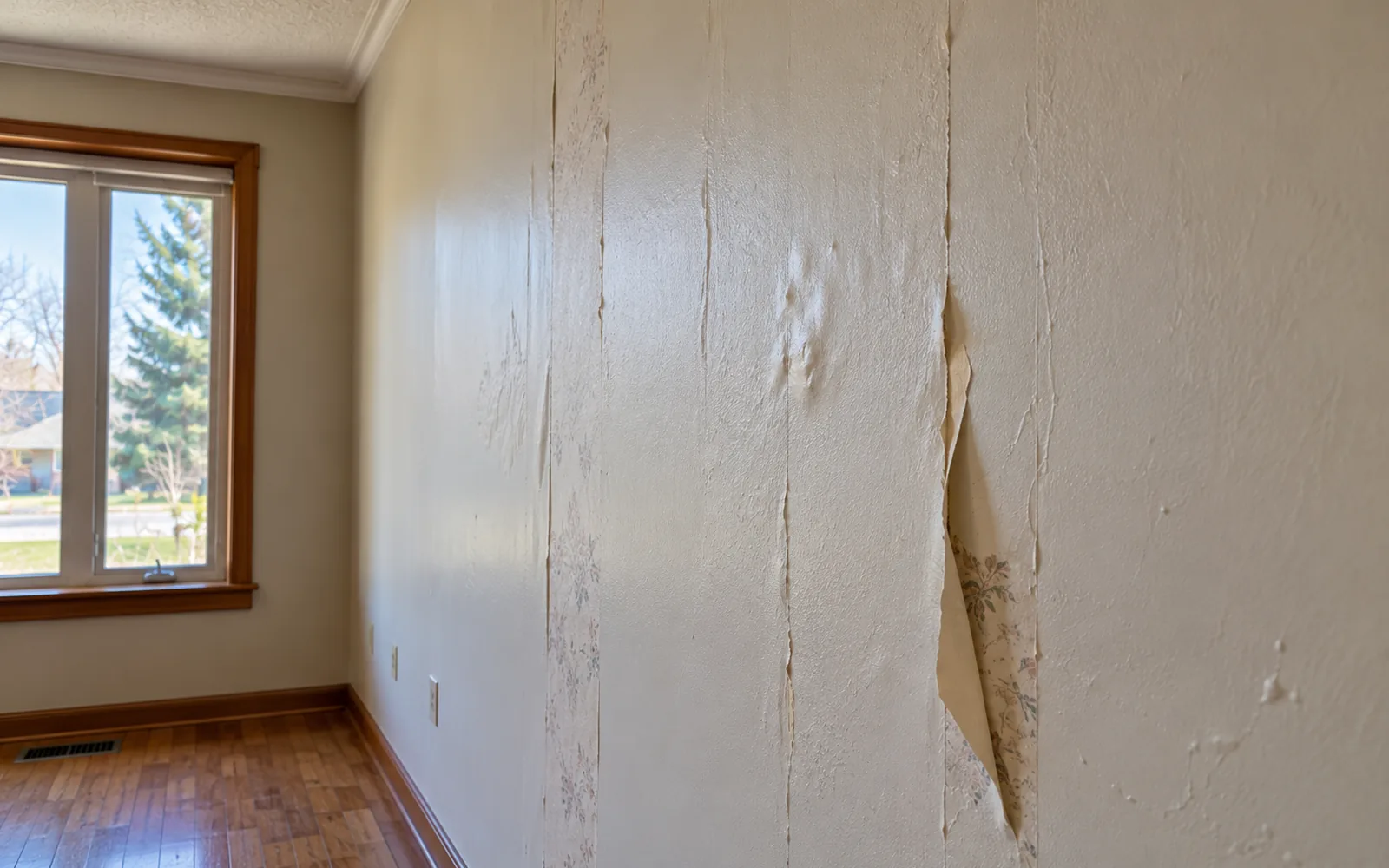
You can paint over wallpaper, but it usually backfires: seams show through, the paper can bubble or peel as the paint's moisture softens the adhesive, and any texture stays visible under the new colour. It also makes the wallpaper much harder to remove later, because the paint seals the paper and stops removal solutions from soaking in.
If you're looking at dated wallpaper and hoping a coat of paint will save you from stripping it, it's worth knowing how that usually turns out, and the few cases where painting over it can make sense, before you buy the paint.
Not sure what's on your walls? Send Rob a couple of photos through the free estimate form. Estimates are free, written and no obligation, and Rob usually responds within about 24 hours.
Why painting over wallpaper is tempting
The appeal is easy to see. Removing wallpaper takes time, it's messy, and you don't know what the wall underneath looks like until the paper is off. Painting over it seems to skip all of that: one coat of primer, two coats of colour, done.
The problem is that wallpaper was never designed to be a paint surface. It's a layer of paper or vinyl held to the wall by adhesive, with seams every couple of feet. Paint adds weight, moisture and a hard skin on top of that layer, and that's where things start to go wrong.
What usually goes wrong
Seams show through. Wallpaper is hung in strips, and every seam is a slight ridge or gap. Paint doesn't hide those lines; a flat, even colour often makes them more obvious, especially when light rakes across the wall from a window.
Bubbling and peeling. Water-based paint carries moisture into the paper. That moisture can soften the old adhesive, and the paper lifts into bubbles or lets go at the seams and edges. Sometimes it happens while the paint dries. Sometimes it shows up months later, after the room has gone through a few seasons of humidity changes.
Texture stays visible. Embossed, flocked, grasscloth and textured vinyl papers keep their pattern under paint. Even a smooth paper can show a faint outline of its design once a single colour goes over it.
Removal gets harder later. This is the cost most people don't think about. Painted wallpaper resists water and removal solutions, so whoever strips it next (you, a future buyer, or a contractor) has more work ahead and a higher risk of damaging the drywall underneath.
Problems underneath stay hidden. Paper can hide cracks, old patches or damaged drywall. Paint over it and those issues are sealed in rather than fixed.
When people paint over wallpaper anyway
To be fair, there are situations where homeowners choose to paint over it and accept the trade-offs:
- The paper is smooth, thin and still bonded tightly everywhere, with no lifting seams or corners.
- It's a short-term fix, such as a room you plan to renovate fully within a year or two.
- A test corner pulls the drywall's paper face off with the wallpaper, and you aren't ready to take on the wall repairs that removal would need.
Even then, the wall needs careful preparation: loose seams glued down, any lifting edges dealt with, and a suitable primer chosen for the job before any finish coat goes on. Skipping that prep is where most failures start. If you're tempted by this route, it's worth having someone look at the wall first so you know which situation you're actually in.
Painting over wallpaper vs removing it first
| Factor | Paint over wallpaper | Remove wallpaper, then paint |
|---|---|---|
| Upfront work | Less: prime and paint | More: removal, wall repair, then paint |
| Finished look | Seams, edges and texture often visible | Smooth, even paint finish |
| Risk of bubbling or peeling | Real risk as paint moisture softens adhesive | Not a factor once paper is gone |
| Hidden wall problems | Sealed in under paint | Found and repaired before painting |
| Future removal | Harder; paint blocks removal solutions | Nothing left to remove |
| Resale impression | Buyers and inspectors may spot painted paper | Looks like a properly finished wall |
| Best for | Short-term fixes on smooth, well-bonded paper | Anyone keeping the room or selling the home |
Which option fits your Barrie home?
Paint over wallpaper is best for a stopgap. If the paper is smooth, every seam is tight, and the room is due for a full renovation soon anyway, painting over it can buy you a few presentable years. It's a poor choice in bathrooms, kitchens and laundry rooms, where steam and humidity keep working on the adhesive, and in basements where moisture levels change through the year.
Removing it first is best for most Barrie homeowners and property owners: anyone staying in the home for years, anyone preparing to list, and landlords who want a wall they can repaint quickly between tenants without wrestling old paper. In older homes, wallpaper has often been on the walls for decades, sometimes in more than one layer. That's exactly the situation where painting over it is most likely to fail, and where removal pays off.
What removal and repainting involve
Once the wallpaper comes off, the wall underneath is rarely ready for paint straight away. There's usually leftover adhesive to clean off, small tears in the drywall's paper face, old nail holes and minor dents. Depending on the condition, the wall may need spot repairs or a skim coat before priming. We walk through this step by step in how wallpaper removal works and why walls need repair after.
Hunt Contracting does wallpaper removal only; we don't install new wallpaper. After removal, wall repairs, skim coating and painting are available if you want them, and each is quoted so you can see exactly what you're paying for.
On interior painting, Hunt's painting service covers walls, ceilings, trim, doors and windows, with paint included (Hunt uses Sherwin-Williams). It also includes what Rob calls the check-out: after the first coat of primer or paint, Rob walks the whole house and patches everything visible before the final coat goes on. That matters on a wall that just had wallpaper stripped from it, because small marks that hide on bare drywall often only appear once the first coat is on. Patching them before the final coat means the repairs don't "flash" through the finish.
What it typically costs
In the Barrie area, wallpaper removal can range from roughly $2.50 to $5.00 per square foot of wall, depending on the wallpaper type, the number of layers, the adhesive and the wall condition. Wall repairs, skim coating and painting are quoted separately.
Interior painting can range from roughly $2.50 to $7.00 per square foot, depending on prep and which surfaces are included. For more on what moves that number, see our house painting cost guide.
Your free written estimate confirms the exact price.
Painting over wallpaper can look cheaper on paper. But if it bubbles or the seams show, you end up paying to strip painted paper, which is harder than stripping unpainted paper, and then paying to repaint anyway.
Ready to get the paper off properly? Upload photos of the wallpaper, a close-up of a seam or corner, and a wide shot of the room on Hunt's estimate request form. It's free, written and no obligation, Rob usually responds within about 24 hours, and booking early helps get your project on the schedule sooner.
How Rob helps you choose
When you send photos or book a visit, Rob looks at what kind of paper it is, whether there's one layer or several, how well it's stuck to the wall, and what the wall's condition tells him about the drywall underneath.
From there you get a written estimate confirming the removal work and any repairs, skim coating or painting you want included. If you only want the paper removed and plan to paint yourself, that's fine too. Rob prefers to see the space before recommending a paint finish, since the right choice depends on the room and the surfaces.
Hunt Contracting carries general liability insurance and WSIB coverage, and Rob brings 10 years of industry experience. Payment is a 50% deposit up front, with the remainder on completion.
One Facebook recommendation from a painting customer sums up the experience: "Super friendly and easy to communicate with. Had Hunt contracting repaint my 2500 square-foot house, and do some patchwork. Will be using again."
Patch or Replace: The Short Version
Painting over wallpaper saves time today and often costs more later. If the paper is smooth, tight and the room is coming apart for a renovation soon, it can work as a stopgap. For almost everyone else in Barrie, removing the wallpaper, repairing the wall and painting it properly gives you a finish that looks right and stays that way.
Call Rob at 705-716-7069, email quotes@huntcontracting.ca, or request your free estimate and attach a few photos of the wallpaper. It's free, written and no obligation, and Rob usually responds within about 24 hours. Learn more about Hunt's wallpaper removal service.
Common questions
Frequently Asked Questions
Can you paint directly over wallpaper?
You can, but it often fails. Paint moisture can soften the adhesive and cause bubbling or peeling, and seams and texture usually show through. If you do it, the paper must be smooth and fully bonded, seams secured and a suitable primer used first. For a lasting finish, removing the paper before painting is the better choice.
Why does wallpaper bubble after painting?
Water-based paint soaks into the paper and can soften the adhesive behind it. Where the bond weakens, the paper lifts into bubbles or lets go at seams and edges. It can happen while the paint dries or months later as humidity changes. Rooms with steam, like bathrooms and kitchens, are especially prone to it.
Is painted wallpaper harder to remove?
Yes. Paint seals the paper's surface, so water and removal solutions can't soak through to the adhesive easily. That means more work to strip it and a higher chance of damaging the drywall underneath. If you think you might want the wall smooth later, removing the wallpaper before painting saves trouble down the road.
What does wallpaper removal cost in Barrie?
In the Barrie area, wallpaper removal can range from roughly $2.50 to $5.00 per square foot of wall, depending on wallpaper type, number of layers, adhesive and wall condition. Repairs, skim coat and painting are quoted separately. Your free written estimate confirms the exact price, and uploading photos helps Rob quote accurately.
Does Hunt Contracting paint the walls after removing wallpaper?
Yes, if you want it. After removal, Hunt can repair the walls, skim coat where needed and paint, with each part quoted. Interior painting includes Rob's check-out: after the first coat, he walks the house and patches everything visible before the final coat. Hunt removes wallpaper only and does not install new wallpaper.
Planning wallpaper removal?
Send Rob your address, which rooms and a few photos of the wallpaper. Free written estimate.
Request a Wallpaper Removal Estimate