Wallpaper removal usually comes down to three steps: get through the paper's surface, soften the adhesive underneath, and strip the paper off without tearing into the wall. How easily that goes depends on the type of paper, how many layers there are, the glue used and the condition of the wall behind it. If you're in Barrie and looking at a room of dated paper, getting it off is only half of it. The other half is what the walls will look like once it's gone, and what it'll take to make them ready for paint.
That second part catches a lot of homeowners off guard. Here's how removal usually works, why walls so often need repair afterward, and what the whole job typically costs.
If you would rather skip the reading and get a price, send Rob a few photos of the papered walls through the free estimate form. It's free, written and no obligation, and Rob usually responds within about 24 hours.
How wallpaper removal generally works
1. Checking what you're dealing with. The first job is figuring out the paper type and how it was hung. Some papers are "strippable" and peel off in sheets with little effort. Others are vinyl-coated, which means a water-resistant face sits over a paper backing. Some walls have two or three layers, one hung over another across different decades. And in some homes the paper has been painted over, which seals it in.
2. Scoring or perforating the surface. When the face of the paper blocks moisture (vinyl, painted-over paper, or paper with a protective coating), the surface is usually scored or perforated so water or a removal solution can reach the adhesive. This has to be done with a light touch. Pressing too hard cuts through to the drywall paper underneath and leaves marks that show through paint later.
3. Soaking or steaming the adhesive. Warm water, a removal solution or steam is applied to soften the glue. The goal is to let it soak long enough that the paper releases instead of tearing. Rushing this step is the most common cause of wall damage.
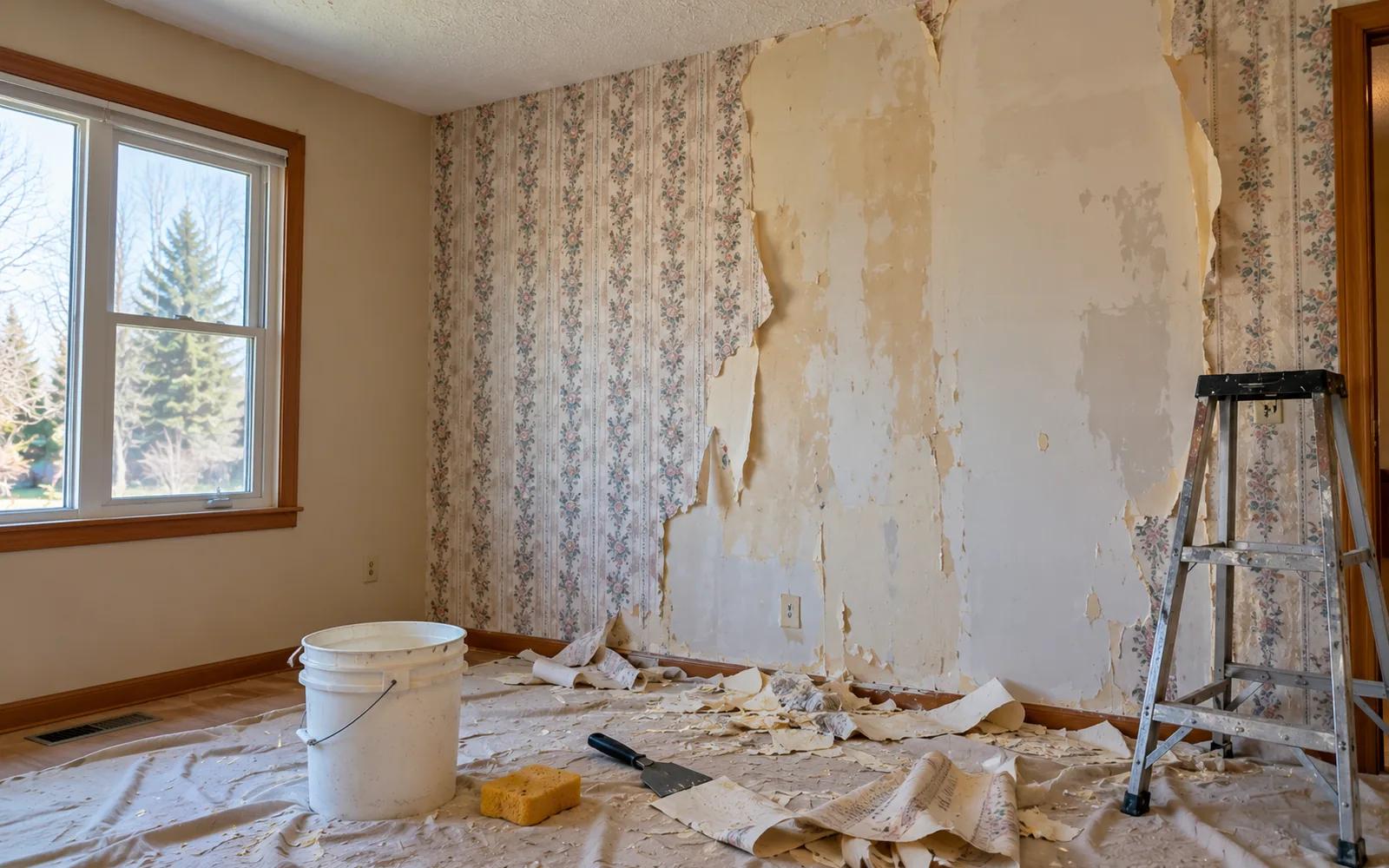
4. Stripping the paper. Once the adhesive lets go, the paper is lifted off, usually with a wide scraper held at a low angle. With vinyl papers, the face often comes off first and the backing stays on the wall, so the backing then needs its own round of soaking and scraping.
5. Removing the adhesive residue. This is the step people skip and regret. Even after all the paper is gone, a film of old glue often remains. If it isn't washed off, paint and primer can crack, bubble or fail to bond properly over it.
6. Assessing the wall. With the paper and residue gone, you can finally see the real surface. That's where the repair question comes in.
Things that make removal harder
- Painted-over wallpaper. Paint seals the paper, so moisture can't reach the glue without scoring first. These walls almost always take longer. (If you're weighing whether to just paint over yours instead, read why painting over wallpaper usually backfires.)
- Multiple layers. Each layer adds its own round of soaking and stripping.
- Vinyl papers. Two-stage removal: face first, then backing.
- Paper hung directly on unprimed drywall. Without a primer or sealer underneath, the adhesive bonds straight to the drywall's paper face, and the two can come off together.
- Strong or aged adhesive. Some older glues don't soften easily, and some newer heavy-duty adhesives grip harder than expected.
None of this is visible from across the room, which is why photos matter before anyone gives you a price.
Why walls often need repair after wallpaper removal
Even careful removal can leave a wall that isn't ready for paint. That's not a sign the job went wrong. It's usually a sign of how the paper was hung years ago. The most common issues:
Torn drywall paper. Drywall has a paper face. When wallpaper was applied without a primer or sealer underneath, the adhesive can bond to that face so strongly that the two peel off together. The result is fuzzy, torn or bubbled patches of brown paper. These spots can't just be painted. They need to be sealed and then smoothed with compound, or paint will raise and highlight every tear.
Gouges and scraper marks. Stubborn sections, painted-over paper and old glue all tempt a harder scrape. Small gouges and lines are common, especially in corners and around outlets and trim.
Leftover adhesive. Residue that isn't fully cleaned off can cause new paint to crack or peel. Sometimes it isn't obvious until the first coat goes on.
Old damage the paper was hiding. Wallpaper hides a lot: patched holes, cracks, uneven joints and old repairs that were never finished properly. Once the paper is gone, those all show.
Uneven texture overall. When a wall has a mix of torn areas, gouges and old repairs, spot patching can leave it looking blotchy under paint. In those cases a skim coat (a thin layer of joint compound over the whole wall, sanded smooth) is often the cleaner fix.
How much repair a wall needs isn't something anyone can promise before the paper comes off. A good contractor tells you that up front and prices the repair work separately so there are no surprises.
Removal, wall repairs, skim coating and painting are each quoted separately. For typical Barrie price ranges and what's included, see Hunt's wallpaper removal service.
Getting the walls ready for paint
Most people removing wallpaper want painted walls at the end of it. Hunt does interior painting too: walls, ceilings, trim, doors and windows, paint included. It also includes what Rob calls the "check-out."
Here's how the check-out works. After the first coat (primer or paint) goes on, Rob walks the whole house and patches everything that's visible before the final coat. Primer is good at revealing small flaws that were hard to see on a bare wall, which is exactly why this step matters after wallpaper removal. Patching at that stage means repairs don't "flash" through the finish as dull or shiny spots. Minor patching and prep are included in the painting work.
For bigger damage, like large areas of torn drywall paper or sections that need more than a patch, Hunt's drywall services cover the repair. Small patches are left ready for paint, and larger damage is priced after Rob sees it.
One homeowner put it simply:
"Super friendly and easy to communicate with. Had Hunt contracting repaint my 2500 square-foot house, and do some patchwork. Will be using again." — Paul Bright, Facebook recommendation
Ready to get the paper off?
Upload a few photos of the papered walls through the estimate form, ideally one wide shot of each wall and a close-up of any peeling seams or corners. If you know the paper has been painted over or there's more than one layer, mention it. Your estimate is free, written and no obligation, and Rob usually responds within about 24 hours. See the full wallpaper removal service for more detail.
How to choose a contractor for wallpaper removal
Ask how removal, repairs and painting will each be priced, what happens if the drywall paper tears, and whether the company is insured. A written estimate should answer all three before work begins.
Why Barrie homeowners hire Hunt Contracting
- 10 years of industry experience.
- Removal, repairs and painting from one contractor, each priced separately.
- Insured, with general liability insurance and WSIB coverage.
- Book early. Booking your estimate early helps get your project on the schedule sooner.
- Clear payment terms. 50% deposit up front, remainder on completion.
- Progress updates during the job and a cleanup at the end.
Hunt is based in Angus and serves Barrie and surrounding communities.
Get your free wallpaper removal estimate
Call Rob at 705-716-7069, email quotes@huntcontracting.ca, or request your free estimate online and attach photos of the walls. It's free, written and no obligation, and Rob usually responds within about 24 hours.
Common questions
Frequently Asked Questions
How much does wallpaper removal cost in Barrie?
In the Barrie area, wallpaper removal can range from roughly $2.50 to $5.00 per square foot of wall, depending on wallpaper type, number of layers, adhesive and wall condition. Wall repairs, skim coating and painting are quoted separately. Your free written estimate confirms the exact price for your specific walls.
Why is my drywall peeling off with the wallpaper?
This usually happens when wallpaper was hung on drywall that was never primed or sealed. The adhesive bonds to the drywall's paper face, so the two come off together. Torn areas need to be sealed and smoothed with compound before painting, or the damage will show through the new finish.
Can I just paint over wallpaper instead of removing it?
You can, but it often causes problems. Paint can loosen the glue, causing bubbles and lifting seams, and seams and texture tend to show through. It also makes future removal harder because the paper is sealed. Removing the paper and repairing the wall usually gives a more reliable finish.
Do walls always need a skim coat after wallpaper removal?
No. Some walls only need residue cleaned off and a few small patches. A skim coat makes sense when the wall has widespread torn drywall paper, gouges or uneven old repairs that spot patching won't hide. Nobody can say for certain until the paper is off.
What should I send with my estimate request?
Photos help most: a wide shot of each papered wall plus close-ups of seams, corners and any peeling areas. Mention whether the paper has been painted over, if you know of multiple layers, and whether you also want repairs or painting. Rob usually responds within about 24 hours.
Planning wallpaper removal?
Send Rob your address, which rooms and a few photos of the wallpaper. Free written estimate.
Request a Wallpaper Removal Estimate