
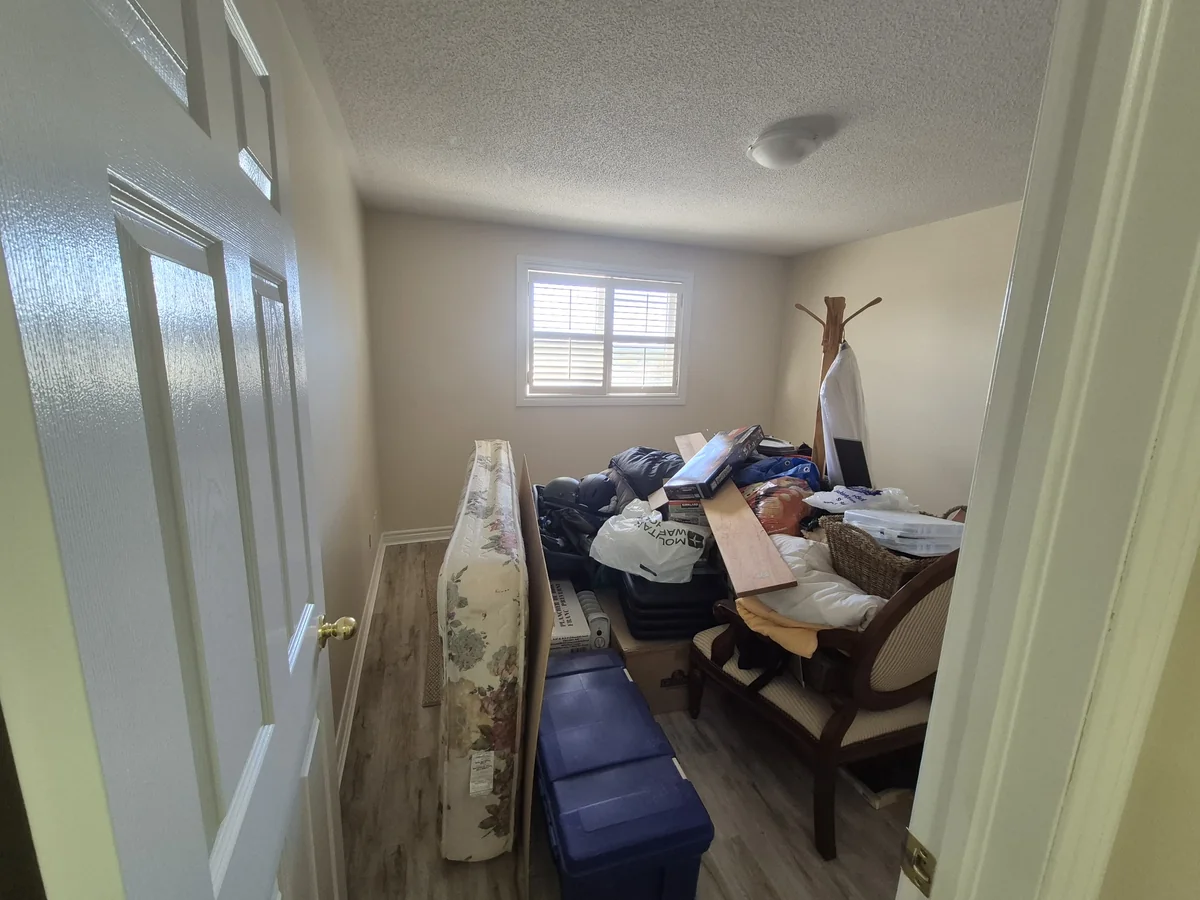
The best paint finish for walls depends on how the room is used and what condition the walls are in. As a general rule, flatter finishes hide flaws and suit low-traffic rooms, while finishes with more sheen are easier to wipe clean and suit kitchens, bathrooms, hallways and trim. For your house, the answer is usually somewhere in between, and a lot depends on the shape your walls are in.
Here's what each finish does, where it usually goes and what you give up with each one, so you can pick for yourself or know what to ask at your estimate.
Repainting soon and not sure your walls can handle a shinier finish? Rob can look at the rooms during a free, written, no-obligation estimate, and he usually responds within about 24 hours. Request your estimate here.
What "finish" or "sheen" actually means
Finish, sometimes called sheen, describes how much light the dried paint reflects. It runs on a scale from no shine to high shine:
- Flat / matte: little to no shine
- Eggshell: a soft, low glow
- Satin: a noticeable, smooth sheen
- Semi-gloss: clearly shiny
- Gloss: highly reflective
Two things change as you move up that scale. Durability and washability generally go up, because a smoother, harder surface lets you wipe off fingerprints and scuffs. At the same time, the paint shows more of what is underneath it. Patches, dents, roller marks and uneven texture all become more visible as sheen increases.
Exact sheen levels and names vary between paint makers, so one brand's "eggshell" may look slightly different from another's. Hunt Contracting works with Sherwin-Williams paint, and sample boards or test patches are the best way to see the real finish on your walls.
Paint finishes compared
| Finish | Sheen | Hides wall flaws | Washability | Commonly used for |
|---|---|---|---|---|
| Flat / matte | None to very low | Best | Lowest | Ceilings, bedrooms, formal living and dining rooms |
| Eggshell | Low | Good | Moderate | Living rooms, family rooms, bedrooms, hallways in lighter-use homes |
| Satin | Medium | Fair | Good | Kitchens, bathrooms, kids' rooms, busy hallways, entryways |
| Semi-gloss | High | Poor | Very good | Trim, doors, window casings, some bathrooms |
| Gloss | Very high | Poorest | Best | Accent trim and doors where a shiny look is wanted |
Treat this table as general guidance, not a rulebook. Wall condition, light and how the room is used can all shift the choice.
Flat and matte: best for hiding imperfections
Flat paint absorbs light instead of bouncing it back, which makes it very forgiving. Small dents, old patches and slightly uneven drywall all tend to disappear under a flat finish. That is why it is the standard choice for most ceilings, where light from windows and fixtures skims across the surface and exposes every flaw.
The trade-off is that flat paint is harder to clean. Scrubbing can leave shiny spots or lift the paint. Some newer matte paints are more washable than older flat paints, but in general, flat is a better fit for rooms that do not see much hands-on contact.
Commonly used for: ceilings, adult bedrooms, formal dining or living rooms, and older walls with a lot of character. In older homes, where walls may have decades of patches and settling, a flatter finish can make a fresh coat look smoother than a shinier one would.
Eggshell: the common middle ground for living spaces
Eggshell has a soft glow that reads as almost flat from most angles. It still hides minor flaws reasonably well, but it stands up to light cleaning better than flat paint. For many homeowners it is the default for main living areas.
Commonly used for: living rooms, family rooms, bedrooms and lower-traffic hallways. If your household spends most of the winter indoors, main-room walls take more contact than you might expect, and eggshell gives you a little more washability without the shine of satin.
Satin: best for rooms that need cleaning
Satin is smoother and shinier than eggshell. It holds up well in busier rooms and still looks good. It handles moisture and repeated wiping better than flatter finishes.
The catch is that satin shows more. Roller lap marks, patches and uneven texture are easier to spot, especially on walls hit by low-angle light. Good prep matters more here than with flat or eggshell.
Commonly used for: kitchens, bathrooms, laundry rooms, kids' rooms, and entryways or mudrooms. Through a long winter, the front entry takes wet boots, road salt and slush, so a finish you can wipe down is worth considering there. Bathrooms and kitchens deal with steam and splatter, which also favour a more washable finish.
Semi-gloss and gloss: trim, doors and high-wear surfaces
Semi-gloss and gloss are hard, shiny and very easy to clean. They are rarely used on full walls in living spaces because they highlight every imperfection, but they are the usual choice for trim, doors, window casings and similar surfaces that get bumped and handled.
A common approach is to pair a flatter wall finish with a semi-gloss trim. The contrast makes trim look crisp and keeps the high-touch surfaces cleanable.
Commonly used for: baseboards, door and window trim, interior doors, and in some cases small, high-moisture spaces.
Touch-ups, colour and sheen
Two practical points often get missed when choosing a finish:
- Touch-ups. As a general rule, flatter finishes blend touch-ups more easily. On satin or semi-gloss, a touched-up spot can show as a patch of slightly different shine, so busy rooms in a higher sheen may need a full wall repainted rather than a dab.
- Colour. The same colour can look a little different in a flat finish than in a satin one, because sheen changes how light reflects. Test patches in the finish you plan to use give the truest read.
Why the walls matter as much as the room
Room-by-room guidance assumes the walls are in decent shape. Many homes have a mix: a kitchen wall with an old patch, a hallway dented by furniture moves, newer basement drywall next to older surfaces. A satin finish that is "right" for a hallway on paper can make those flaws obvious.
This is also why prep matters so much. Patches that are not handled properly can "flash," meaning they show up as dull or shiny spots in the finished wall, and higher-sheen paints make flashing more noticeable. If you have cracks or nail pops you are worried about, our guide to drywall cracks and nail pops explains what usually causes them.
Want satin in the kitchen but worried it will show every old patch? Rob prefers to see the space before recommending a finish, and he will walk you through the options for your actual walls. The estimate is free, written and no obligation, Rob usually responds within about 24 hours, and booking early helps get your project on the schedule sooner. Call 705-716-7069 or request your free written estimate.
How Rob helps clients choose
The right finish depends on the room and the surfaces, so Rob prefers to look at the space before recommending one. In person he can see how the light falls, what condition the drywall is in and how much traffic the room gets, and base his advice on your walls rather than a general rule.
Hunt's interior painting includes a step that matters a lot for finish choice: the check-out. After the first coat (primer or paint) goes on, Rob walks the whole house and patches everything visible before the final coat. That way patches do not flash through the finish. Minor patching and prep are included.
Interior painting in the Barrie area can range from about $2.50 to $7.00 per square foot, depending on how much prep is required and whether the quote covers walls only or a broader package including ceilings, trim, doors, windows and paint. The final price depends on the amount of prep required and the surfaces included. Your written estimate confirms the actual price. For more on what affects the total, see the cost of painting a house in Barrie.
One client summed up the experience in a Facebook recommendation:
"Super friendly and easy to communicate with. Had Hunt contracting repaint my 2500 square-foot house, and do some patchwork. Will be using again." — Paul Bright, Facebook recommendation
Quick verdict: which finish for which room?
As a general rule:
- Ceilings: flat
- Bedrooms and formal rooms: flat or eggshell
- Living and family rooms: eggshell
- Kitchens, bathrooms, laundry rooms: satin
- Entryways, mudrooms, kids' rooms, busy hallways: satin, or eggshell if the walls have a lot of flaws
- Trim and doors: semi-gloss
Use this as a starting point, then let the condition of your walls and the way you live in each room decide the final call.
Get a finish plan for your home
Choosing between eggshell and satin is easier when someone has seen your walls. Rob will look at each room, tell you where a flatter or shinier finish makes sense, and give you the full scope in writing. Hunt carries general liability insurance and WSIB coverage and works in Barrie and surrounding communities; see our painting services.
Call 705-716-7069, email quotes@huntcontracting.ca, or request your free written estimate. It is free, written and no obligation, and Rob usually responds within about 24 hours.
Common questions
Frequently Asked Questions
What is the best paint finish for walls?
There is no single best finish for every wall. As general guidance, eggshell is a common choice for living areas, flat suits ceilings and low-traffic rooms, and satin suits kitchens, bathrooms and busy spaces. The condition of the walls matters too, which is why Rob prefers to see the space before recommending a finish.
Is eggshell or satin better for walls?
Eggshell has less sheen and hides minor wall flaws better, so it is often used in living rooms and bedrooms. Satin is shinier and easier to wipe clean, so it is commonly used in kitchens, bathrooms and high-traffic areas. Satin also shows patches and texture more, so wall condition can tip the decision.
What paint finish is best for a bathroom?
Bathrooms deal with steam and frequent cleaning, so satin or semi-gloss finishes are commonly used because they handle moisture and wiping better than flat paint. The trade-off is that higher sheens show wall imperfections more clearly. Good prep and patching before the final coat help a shinier finish look smooth.
Why is flat paint used on ceilings?
Flat paint reflects very little light, so it hides the small flaws, seams and uneven spots that light from windows and fixtures tends to expose on a ceiling. Ceilings also rarely need washing, so the lower washability of flat paint is not much of a drawback there. That makes flat the standard choice.
Does Hunt Contracting help choose paint finishes?
Yes. Rob prefers to see the space before recommending a finish, because the right choice depends on the room and the surfaces. He can talk through options during your free written estimate. Hunt uses Sherwin-Williams paint, and minor patching and prep are included in interior painting jobs.
Planning a painting project?
Send Rob your address, what needs painting and a few photos. Free written estimate.
Request a Painting Estimate