
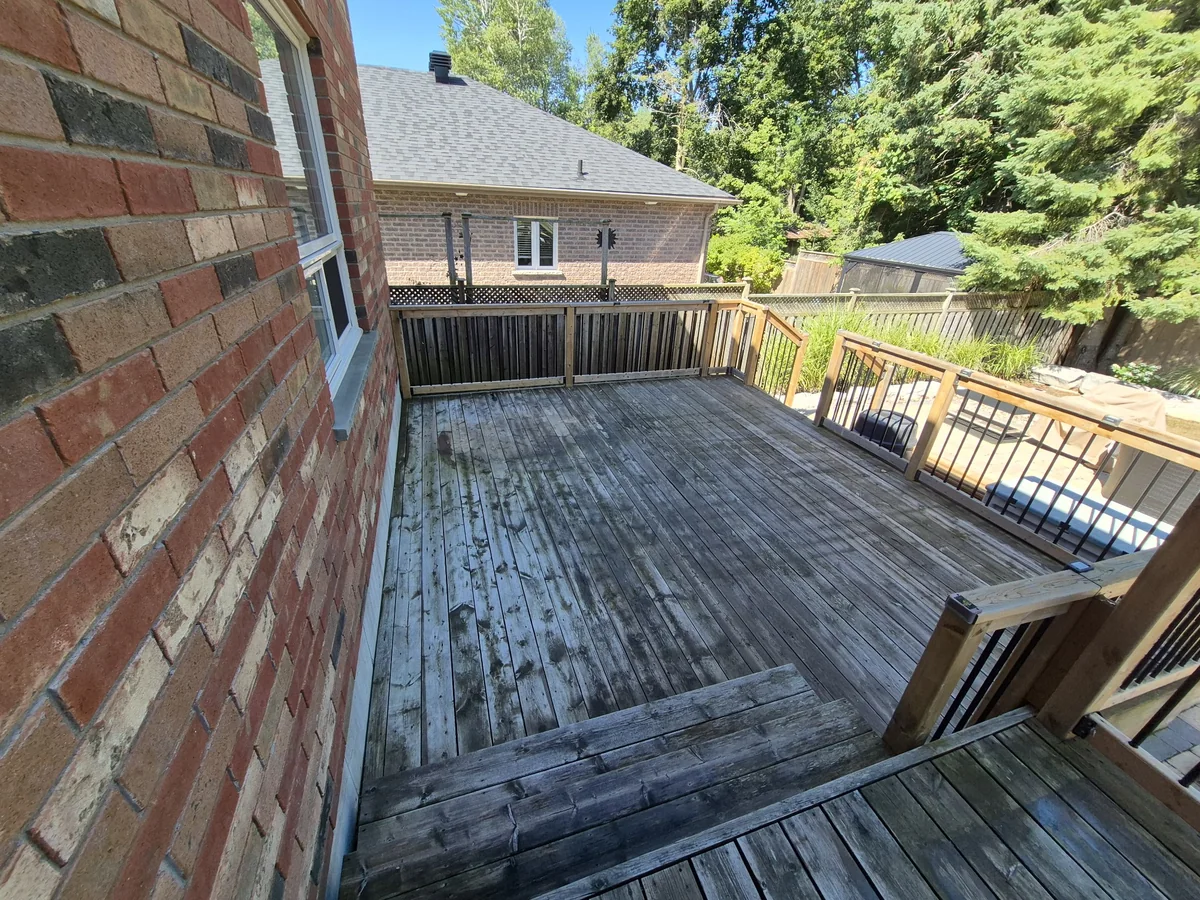
Stain your deck when the wood tells you it's ready: water soaks in instead of beading, the colour has gone grey or blotchy, or the old finish is peeling. Plan the work for a stretch of dry, mild weather that fits the product's label, and give prep as much attention as the stain itself. How often you'll need to repeat it depends on the product, the wood and how much sun and traffic the deck gets, so the honest answer is "check it every spring" rather than a fixed number of years.
What you're really doing is protecting a deck you paid good money for, so it doesn't crack, go grey and rot through Barrie's wet springs, hot summers and freeze-thaw winters.
If your deck failed the water test and you'd rather not do the prep yourself, send Rob a few photos through the estimate form. Estimates are free, written and no obligation, and he usually responds within about 24 hours.
Signs your deck needs staining
These quick checks only take a few minutes:
- The water test. Sprinkle water on a few boards, especially sunny ones. If it beads, the finish is still working. If it soaks in and darkens the wood within a few minutes, the protection is worn.
- Greying or fading. Faded, uneven or silver-grey wood means the finish is no longer protecting the surface.
- Peeling or flaking. Often a sign of a coat that was too thick or applied over poor prep. Peeling finish has to come off before anything new goes on.
- Worn traffic paths. Steps and the area in front of the door usually wear through first.
- Splintering, checking or soft spots. Small surface cracks are normal as wood ages. Soft, spongy boards or loose fasteners are a different issue and need repair, not stain.
Rob looks at the deck in person before quoting any staining job, so you'll know whether you're dealing with a surface that just needs a fresh coat or something more.
How often should a deck be stained?
There's no one right answer. How long a finish lasts depends on:
- The type of stain. Clear and lightly tinted finishes generally need renewing sooner than more heavily pigmented ones, because pigment helps block sunlight. Always follow the manufacturer's directions for the product on your deck.
- Sun exposure. A south- or west-facing deck in full sun wears faster than one shaded by the house or trees.
- Traffic. Busy family decks and rental property decks see more wear than one used a few evenings a summer.
- The wood itself. Pressure-treated wood and cedar both benefit from a protective finish; composite generally isn't stained the way wood is. Still choosing materials? See pressure-treated, cedar or composite decks.
The simplest habit: do the water test every spring once the snow is gone. If water soaks in, plan to stain once the weather allows.
When to stain: the weather conditions that matter
Go by the weather, not the calendar. Here's what to look for:
- Wait for dry wood. Stain needs to soak in, not sit on damp boards. After washing or rain, give the deck time to dry.
- Pick a dry forecast. The finish needs dry weather to cure. A shower on fresh stain can leave it blotchy.
- Avoid extremes. Hot direct sun can make stain dry too fast and unevenly; cold evenings slow curing. Check the label's temperature range.
- New pressure-treated wood. New PT lumber is often still wet from treatment. It's widely recommended to let it dry before staining; the water test helps tell you when.
In short, look for dry wood, a dry forecast and temperatures inside the range on the product label, and avoid the hottest midday sun.
Prep is most of the job
The stain is the easy part. What makes a finish look good and last is the preparation underneath. Cleaning comes first: our guide to pressure washing before staining covers timing, and Hunt also offers pressure washing. General prep usually includes:
- Clearing the deck of furniture and planters.
- Cleaning off dirt, mildew and grime.
- Removing failed finish, or the new coat fails with it.
- Sanding rough spots where needed.
- Fixing popped nails, loose screws and damaged boards.
- Letting everything dry before staining.
Stain applied over dirt, mildew or peeling finish won't bond properly, and the deck can look worse within a season.
That's why Rob looks at the deck first. Prep is a big part of any staining job and varies a lot from deck to deck, so seeing it in person means your written estimate reflects what your deck actually needs.
What affects the cost of deck staining
There's no flat price for staining, because the work varies so much from deck to deck. The main factors:
- Size of the deck, including any upper and lower levels
- Railings, spindles and stairs, which take far more time per square foot than open decking
- The condition of the old finish, since peeling or failed coatings have to come off first
- Repairs to boards, fasteners or railings before any stain goes on
That's why Rob looks at the deck before pricing it, and why your written estimate is based on your deck rather than a generic rate.
Want to know what your deck needs before you stain? Call 705-716-7069 or request your estimate online with photos of the boards, railings and stairs. Hunt Contracting's estimates are free, written and come with no obligation. Rob typically responds within about 24 hours, and booking early helps get your project on the schedule sooner.
Stain or repair first? Check the boards
Stain protects sound wood. It won't fix wood that's already failing. Look for:
- Soft or spongy boards, especially near the house and around posts
- Boards that are split, cupped badly or rotted at the ends
- Loose or wobbly railings and stairs
- Posts or framing showing rot where they meet the ground
A deck with a few bad boards can often be repaired and then stained. A deck with widespread rot in the framing is a different conversation. Because Hunt Contracting builds, repairs and replaces decks, Rob can spot boards that need attention before staining and include the repair in the same written estimate. If you're not sure which side of the line your deck is on, read Deck Repair or Replace? Fixing these first means you're not paying to stain a board that has to come out next year.
Working with Hunt Contracting
- Deck builder and repairer. Hunt builds, repairs and replaces decks in pressure-treated wood, cedar and composite, so boards that need repair can be dealt with before any stain goes on. See our deck construction and repair services.
- Simple process. You tell us about the deck, Rob comes and looks at it, you get a written estimate, and you get progress updates while we work. 50% deposit up front, the rest on completion.
- Insured. General liability insurance and WSIB coverage.
Hunt also takes on fence staining. If your fence is in the same shape as your deck, see Staining Your Fence in Barrie and ask about both in one estimate.
Get a written estimate for your deck
If your deck is soaking up water, greying or peeling, it's due. The sooner it's looked at, the less likely a staining job turns into a board-replacement job, and Rob can include prep and any repairs in one written estimate.
Call Rob at 705-716-7069, email quotes@huntcontracting.ca, or request a free written estimate. It's free, written and no obligation, with a response usually within about 24 hours, and booking early helps get your project on the schedule sooner.
Common questions
Frequently Asked Questions
How do I know if my deck needs to be stained?
Sprinkle water on a few boards. If it beads, the finish is still working. If it soaks in and darkens the wood within a few minutes, the deck needs attention. Fading, greying, peeling and worn traffic paths are other clear signs. Soft boards or loose railings mean repair should come before stain.
How often should a deck be restained in Barrie?
There's no single interval. How long a finish lasts depends on the stain type, sun exposure, foot traffic and the wood. Follow the manufacturer's guidance for your product, and do a water test every spring. If water soaks in rather than beading, plan to restain once you have a stretch of dry weather.
What weather do you need to stain a deck?
As general guidance, stain goes on best when the wood is fully dry, there's no rain in the forecast while it cures, and temperatures sit within the range on the product label. Avoid damp boards, very hot direct sun and cold evenings. New pressure-treated wood should usually dry out before it's stained.
Should I repair my deck before staining it?
Yes. Stain protects sound wood but won't fix soft, rotted or split boards, loose railings or popped fasteners. Repairing first means you aren't staining wood that needs replacing soon. Rob looks at the deck before quoting and can include any board or railing repairs in the same written estimate.
How much does deck staining cost in Barrie?
It depends on the deck's size, railings and stairs, how much old finish has to come off, and whether repairs are needed. Because prep varies so much, Rob looks at the deck before pricing it. Hunt Contracting's estimates are free, written and no obligation, with a response usually within about 24 hours.
Planning a deck project?
Send Rob your address, a rough deck size, the material you're leaning toward and a few photos. Free written estimate.
Request a Deck Estimate