
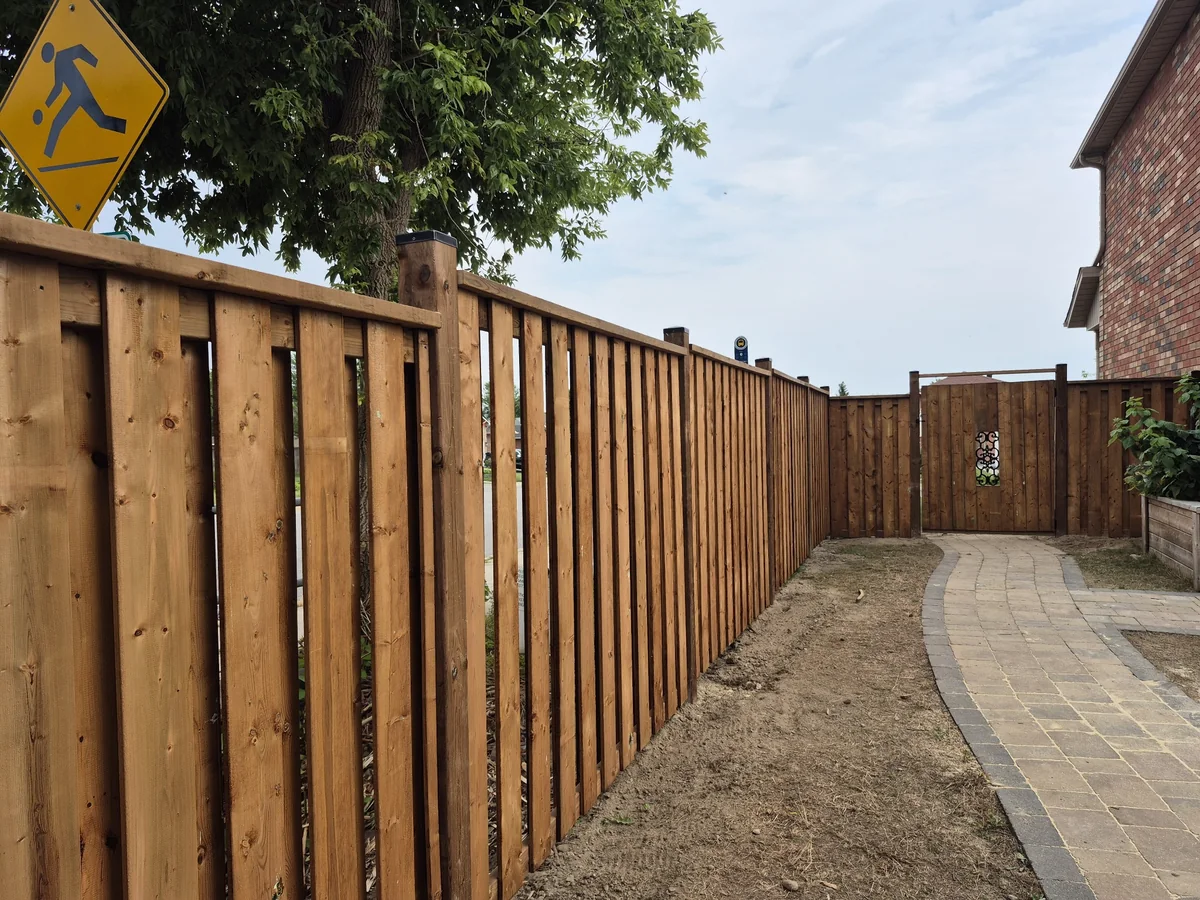
The best time to stain a fence in Barrie is during a stretch of dry, mild weather, once the wood is clean, dry and able to absorb stain. For a new pressure-treated fence, that usually means waiting until the wood has dried out rather than staining right after it goes up. For an older fence, it means fixing loose boards and leaning posts first, because stain protects wood but does not repair it.
Most people asking about fence staining have one of two problems: a new fence they want to protect from the start, or an older fence that's gone grey, blotchy or rough and looks tired next to the rest of the yard.
Want Rob to look at your fence before it's stained? Send a few photos through the free estimate form, including any loose boards or leaning posts. The estimate is free, written and no obligation, and Rob usually responds within about 24 hours.
Why stain a fence at all?
A fence takes more abuse than almost anything else in the yard. It stands in the weather on both sides, its posts sit in soil, and the bottoms of the boards often stay damp from snow, sprinklers and garden beds. In the Barrie area, cold winters and repeated freeze-thaw cycles add to that wear.
A good stain does two jobs:
- Slows down moisture. Wood that soaks up water and dries out over and over tends to check, split and warp. A stain helps the surface shed some of that water.
- Reduces sun damage. UV light is what turns bare wood grey. Stains with pigment help slow that fading.
Stain will not stop rot that has already started, straighten a leaning post or tighten a loose board. That is why the condition of the fence matters as much as the stain itself.
How Hunt helps: Rob looks at the fence before quoting the staining. If boards or posts need attention, he can handle the repairs as part of the same job, so you are not paying to stain wood that needs replacing.
When to stain a new fence
A common mistake is staining a brand-new pressure-treated fence right away. Pressure-treated lumber often arrives at the yard still wet from the treatment process, and wet wood does not absorb stain well. The stain can sit on the surface, dry unevenly or wear off early.
General guidance is to let new pressure-treated wood dry before staining. How long that takes depends on the lumber, the weather and how much sun the fence gets, so the stain manufacturer's label is the best source for a specific waiting period. A simple way to check is the water test:
- Sprinkle a few drops of water on the boards.
- If the water beads up and sits there, the wood is likely still too wet or sealed to take stain.
- If the water soaks in within a few minutes, the wood is generally ready.
If you are still at the planning stage, our guide on how to plan a new fence covers layout, materials and what to sort out before installation.
How Hunt helps: If Hunt builds your fence, you can ask about staining in the same conversation and plan it for when the wood is ready.
Signs your existing fence is due for stain
You don't need a calendar to know a fence needs stain. Look for these signs:
- Water soaks in instead of beading. Use the same water test as above. If water darkens the wood and disappears quickly, the protection is wearing thin.
- Colour has faded or gone grey. Greying is the surface fibres breaking down in the sun.
- Peeling or flaking. This is more common with solid stains and paint-like finishes, and it usually means more prep work before recoating.
- Rough, fuzzy surface. Weathered fibres feel coarse and may need cleaning or light sanding to take new stain evenly.
How often a fence needs restaining varies a lot with the type of stain, the wood, sun exposure and how the fence was prepared. The stain manufacturer's guidance is a better starting point than any single rule of thumb.
Prep matters more than the stain
Prep is a big part of any staining job, and on a fence there is a lot of surface to cover: two faces of every board, the edges, the posts, the rails and any gates. Cleaning comes first: our guide to pressure washing before staining covers timing, and Hunt also offers pressure washing. General prep usually includes:
- Repairs first. Loose or cracked boards, rotted sections and leaning posts should be dealt with before stain goes on. Staining over a problem usually means paying twice.
- Cleaning. Dirt, mildew and loose grey fibres keep stain from soaking in. Fences are typically washed or cleaned and then left to dry fully.
- Removing failing finish. If an old finish is peeling, it generally needs to come off before new stain will bond.
- Protecting what is nearby. Fences sit right beside gardens, shrubs, siding, patios and sometimes a neighbour's car or shed. Covering plants and hard surfaces is part of a careful job.
- Checking the gate. Gates get handled more than any other part of the fence. If yours sags or sticks, it is worth fixing before it gets a fresh finish.
If you are not sure whether your fence is worth staining at all, our guide on whether to repair or replace a fence walks through how to tell. And if posts shifted over the winter, leaning fence posts after frost heave explains what is usually going on.
How Hunt helps: For leaning or heaved posts, Rob's usual fix is to pull the post and reset a new one in concrete. Board and gate repairs are priced by what the fence actually needs. Doing the repairs and staining together means you only need one estimate and one booking.
"Rob was prompt, professional and does excellent work." — Dave Forkutza, Facebook recommendation (fence and gate repair)
Picking the right weather window
Weather affects how a stain turns out more than most people expect. Here's what to watch for:
- Dry wood, dry forecast. The wood should be dry before you start, and the stain needs time to dry before rain. A clear stretch of a couple of days is ideal.
- Mild temperatures. Stain makers list a temperature range on the label. Very cold nights can slow drying, and very hot days can make stain dry too fast.
- Avoid strong midday sun if possible. Staining a sun-baked board can cause lap marks and uneven colour.
The stain label's temperature range and the forecast are the best guide to when your fence can be done.
How Hunt helps: booking your estimate early makes it easier to catch a good stretch of weather for your fence.
Ready to get your fence on the schedule? Call Rob at 705-716-7069 or request a free written estimate, and mention whether you want one side or both stained and any repairs you've noticed. There is no obligation, and you will usually hear back within about 24 hours.
A few things to sort out before you book
- Which sides are being stained. If the fence is on a shared property line, the other face is often your neighbour's view. It is worth a friendly conversation about whether both sides are being done and whether they have any preferences.
- Stain type and colour. Transparent, semi-transparent and solid stains look and wear differently. Seeing a sample on your actual boards is the most reliable way to choose.
What affects the cost of fence staining
Rob prices fence staining after seeing the fence, because every fence is different. The main factors are:
- Length and height of the fence
- One side or both sides
- Condition of the wood and how much cleaning or finish removal is needed
- Any board, post or gate repairs
- The stain chosen and how many coats it needs
- Access, including plants, tight side yards and nearby structures
Your written estimate lays out the scope so you know what is included before work starts. Payment is a 50% deposit up front, with the remainder on completion.
Why homeowners hire Hunt Contracting
- Full fence services. Installation, repairs, gates and removal are all part of Hunt's fence services, so staining can be paired with any repairs the fence needs.
- Insured, with general liability insurance and WSIB coverage, and 10 years of industry experience.
- Clear process. You tell us about the project, Rob reviews it or comes out to see it, you get a written estimate, and you get progress updates while we work and a cleanup at the end.
Get your fence looked at before it's stained
Stain only works as well as the wood under it. Send Rob photos of the fence, both faces if you can, plus any boards, posts or gates that need attention, and he'll put the repairs and staining into one written estimate. Call 705-716-7069, email quotes@huntcontracting.ca, or request your free written estimate. It's free and no obligation, and Rob usually responds within about 24 hours.
Common questions
Frequently Asked Questions
When is the best time to stain a fence in Barrie?
Generally, during a stretch of dry, mild weather, when temperatures sit within the range on the stain label and no rain is forecast for a day or two. The wood itself should be clean and dry. Getting your free written estimate ahead of time makes it easier to book the work when a good stretch of weather arrives.
How long should I wait to stain a new pressure-treated fence?
It depends on how wet the lumber was, the weather and sun exposure, so follow the stain manufacturer's guidance. A simple check is to sprinkle water on the boards. If it beads up, the wood likely needs more time. If it soaks in within a few minutes, the wood is generally ready for stain.
How do I know if my fence needs to be restained?
Common signs are water soaking into the wood instead of beading, faded or grey colour, peeling or flaking finish, and a rough, fuzzy surface. Sunny sections usually wear first. If several of these show up, the fence is likely due, and it is a good time to check boards and posts for damage too.
Should I repair my fence before staining it?
Yes. Stain protects wood but does not fix loose boards, rot or leaning posts. Repairing first means you are not paying to stain wood that will soon be replaced. Hunt can handle repairs and staining together, and Rob's usual fix for a leaning or heaved post is to pull it and reset a new one in concrete.
How much does fence staining cost in Barrie?
It depends on the fence's length and height, whether one or both sides are stained, the wood's condition, any repairs, the stain chosen and access around the fence. Rob prices staining after seeing the fence, and Hunt provides a free written estimate with no obligation, usually responding within about 24 hours.
Planning a fence project?
Send Rob your address, a rough fence length, any gates or repairs, and a few photos. Free written estimate.
Request a Fence Estimate