
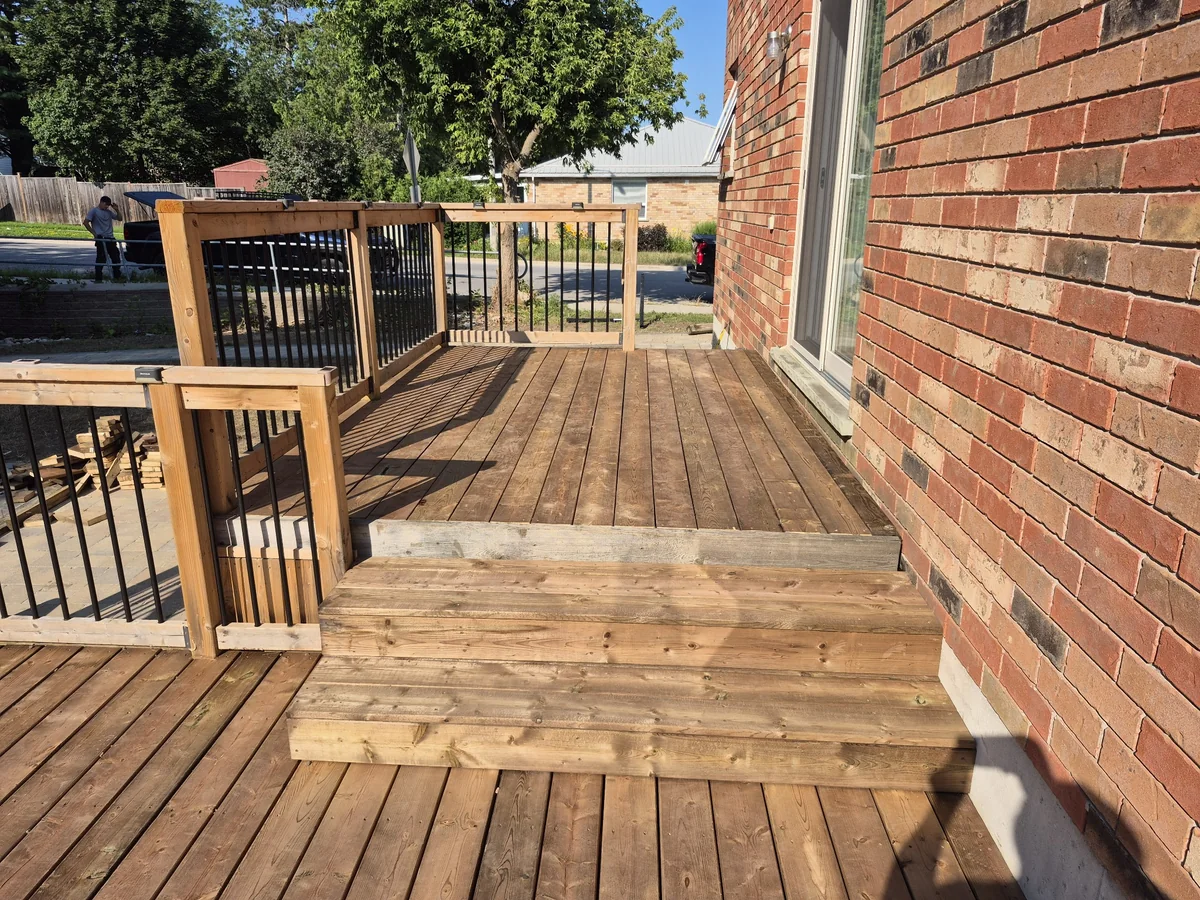
If you want the lowest upfront cost, pressure-treated wood wins. If you want natural wood with a warmer look, cedar is the middle ground. If you want the least upkeep over the long run and the best resistance to our freeze-thaw winters, composite is usually the strongest choice, but it costs the most to build.
The right choice depends on your budget, how long you plan to stay, and how much upkeep you want after every winter. Hunt Contracting builds with all three, so we have no reason to push one over another.
Torn between two of them? Request a free written estimate and ask Rob to price your deck in both, so you can compare real numbers instead of guesses. It's written, there's no obligation, and he usually responds within about 24 hours.
Quick comparison: pressure-treated vs cedar vs composite
| Pressure-treated wood | Cedar | Composite | |
|---|---|---|---|
| Upfront cost | Lowest | Moderate | Highest |
| Lifespan | Good with regular care | Good with regular care | Longest, with the least upkeep |
| Maintenance | Regular cleaning, sealing or staining | Regular cleaning and finishing to keep its colour | Periodic washing; no staining |
| Freeze-thaw | Absorbs moisture; can check, split or warp over time | Naturally stable, but still absorbs moisture | Absorbs very little moisture; stays stable |
| Snow and shovelling | Surface can gouge; holds up with care | Softer wood; dents and scratches more easily | Use a plastic shovel; avoid metal edges |
| Look | Practical; takes stain well once dry | Warm, natural grain and colour | Consistent colour and texture |
| Best for | Budget builds, rentals, ground-level decks | Homeowners who want real wood and don't mind upkeep | Long-term owners who want low maintenance |
Why material choice drives your total deck cost
Along with size and complexity, the material you pick is one of the biggest things that decides what a deck costs. Your free written estimate confirms the exact price.
The material you pick affects the cost of the whole build, not only the lumber. Two decks with the same footprint can land at very different totals simply because one uses pressure-treated boards and the other uses composite, and a complex design in a premium material climbs quickly. For a fuller look at what moves the price, see our guide to the cost of a new deck in Barrie.
Pressure-treated wood
Pressure-treated (PT) lumber is wood that has been treated to resist rot and insects. It's the most common and affordable deck material, and most deck frames are built from it, including many cedar and composite decks.
Cost: The lowest of the three, and because material is a big part of deck cost, that saving carries through to the total.
Lifespan: A well-built, well-maintained PT deck can serve you for many years. Neglect shortens that.
Maintenance: PT wood needs regular cleaning and a protective finish to slow down weathering. Without it, boards tend to grey, check (develop surface cracks) and split.
Barrie winters: Wood absorbs water. Repeated freezing and thawing through winter and spring can lead to cracking, cupping and warping over time. A good finish and proper drainage help.
Snow: PT handles shovelling reasonably well, though metal edges will gouge the surface.
Cedar
Cedar is a natural softwood prized for its colour, grain and smell. It contains natural oils that help it resist rot and insects without chemical treatment.
Cost: Generally more than pressure-treated, less than composite.
Lifespan: Like PT, cedar can last many years when looked after. Left unfinished, it weathers to silver-grey.
Maintenance: Keeping cedar's original colour takes regular cleaning and refinishing. Our post on when and how often to stain your deck covers the general guidance.
Barrie winters: Cedar tends to resist warping better than many woods, but it still absorbs moisture, so freeze-thaw cycles wear on it without a protective finish.
Snow: Cedar is softer and dents more easily than PT, so shovel with a lighter touch.
Composite
Composite decking is a manufactured board, typically made from a blend of wood fibres and plastic. The frame underneath is usually still pressure-treated lumber.
Cost: The highest of the three. Because material is a big part of deck cost, a composite deck costs noticeably more to build than the same deck in PT or cedar.
Lifespan: Generally the longest service life for the least effort.
Maintenance: No sanding, staining or sealing. Periodic washing is usually enough.
Barrie winters: Composite absorbs very little water, so it holds up well to freeze-thaw cycles. It doesn't crack, split or splinter the way wood can.
Snow: Composite can scratch, so most manufacturers recommend a plastic shovel. Check your product's guidance, including which ice melt is safe to use.
Trade-offs: Composite can get hot in direct sun, especially darker colours, and some people prefer real wood underfoot.
Can you mix materials?
Yes, and most decks already do. As noted above, cedar and composite decks are usually built on a pressure-treated frame, because the frame is hidden and the surface boards are what you see, walk on and maintain. That means the choice you're really making is mostly about the decking and railings. Some homeowners put their budget into the surface they use most and keep the rest simple. Rob can price the combination you're considering in your written estimate.
Ready to compare real numbers for your yard?
The table above tells you how the materials differ. It can't tell you what PT, cedar or composite will actually cost on your deck, because that depends on size, height, layout and access. A written estimate from Hunt Contracting can put the materials you're considering side by side for your project.
- Free, written and no obligation
- Rob usually responds within about 24 hours
- Booking early gets you on the schedule sooner
Call 705-716-7069, email quotes@huntcontracting.ca, or request your free estimate online.
Best for: our verdict for Barrie homes
Pressure-treated is best for: budget-conscious homeowners, rental and property owners who need a solid, practical deck, and simple or ground-level builds. If you're comfortable with regular upkeep, PT gives you the most deck for your money.
Cedar is best for: homeowners who want the look and feel of natural wood and don't mind a regular finishing routine to protect it through our cold winters.
Composite is best for: homeowners planning to stay put for many years who would rather spend summers using the deck than working on it. With the long winters, snow and freeze-thaw cycles we get around Lake Simcoe, composite's moisture resistance is a real advantage. The higher upfront cost is the trade-off.
How Rob helps you choose
Rob has 10 years of experience in the trade, and Hunt builds with all three materials, so he can tell you straight what makes sense for your deck. Hunt is insured, with general liability insurance and WSIB coverage.
- Tell us about the project: size, how you'll use the deck, and a rough budget if you have one.
- Review or on-site visit when needed, to check height, access and layout.
- Written estimate, so you can compare materials knowing what each will cost.
- The build, with progress updates and final cleanup.
- Season: Hunt builds decks from April to mid-October.
- Permits: The homeowner usually pulls the permit, and Hunt can help with the process. Check with the City of Barrie about what your project requires.
- Payment: 50% deposit up front, remainder on completion.
Hunt also handles deck repair and replacement, so if your current deck is worn out, Rob can tell you whether to fix it or rebuild.
Get a free written estimate for your new deck
Hunt Contracting builds decks from April to mid-October in Barrie and surrounding communities, working out of our base in Angus. Whichever material you're leaning toward, start with a clear, written price.
Call Rob at 705-716-7069, email quotes@huntcontracting.ca, or request your free written estimate. Tell Rob which materials you're weighing. It's free, written and no obligation, and you'll usually hear back within about 24 hours.
Common questions
Frequently Asked Questions
Which deck material is cheapest: pressure-treated, cedar or composite?
Pressure-treated wood has the lowest upfront cost, cedar sits in the middle, and composite costs the most. Material is one of the biggest drivers of deck cost, so your choice has a big effect on the final price. A written estimate confirms the exact figure.
Which deck material holds up best to Barrie winters?
Composite generally handles freeze-thaw cycles best because it absorbs very little water, so it resists cracking, splitting and warping. Pressure-treated and cedar both absorb moisture, which can freeze and thaw repeatedly through winter and spring. With a protective finish and regular care, wood decks can still perform well for many years.
Is a composite deck worth the extra cost?
It depends on how long you plan to stay and how much upkeep you want. Composite costs more upfront but skips the staining and sealing that wood needs. If you're staying for many years and value low maintenance, it's often worth it. For rentals or tighter budgets, pressure-treated usually makes more sense.
Can I shovel snow off a composite deck?
Yes, but use a plastic shovel. Most composite manufacturers caution against metal shovel edges because they can scratch the boards. Check the guidance for your specific product, including which ice melt products are safe to use. Wood decks also scrape under metal edges, and softer cedar dents more easily.
Does Hunt Contracting build all three types of decks?
Yes. Hunt Contracting builds new decks in pressure-treated wood, cedar and composite, and also handles deck repair and replacement. Rob gives you a free written estimate with no obligation and usually responds within about 24 hours. Booking early helps get your deck on the schedule sooner. Deck season runs April to mid-October.
Planning a deck project?
Send Rob your address, a rough deck size, the material you're leaning toward and a few photos. Free written estimate.
Request a Deck Estimate