
Most decks can be repaired when the problems are on the surface: a few soft boards, a loose railing section, a stair tread that's cracked. When the trouble reaches the structure underneath (rotted posts, a failing ledger, footings that have moved), replacing part or all of the deck is usually the better spend. The hard part is telling which situation you're in before you put money into it.
You don't want to pay for a fix that only lasts one summer, or tear out a deck that only needed a few new boards. Here's what to look for, the three ways you can go, and how Rob at Hunt Contracting can help you pick.
Found a soft spot or a wobble? Send Rob a few photos through the free estimate form. The estimate is free, written and no obligation, and he usually responds within about 24 hours.
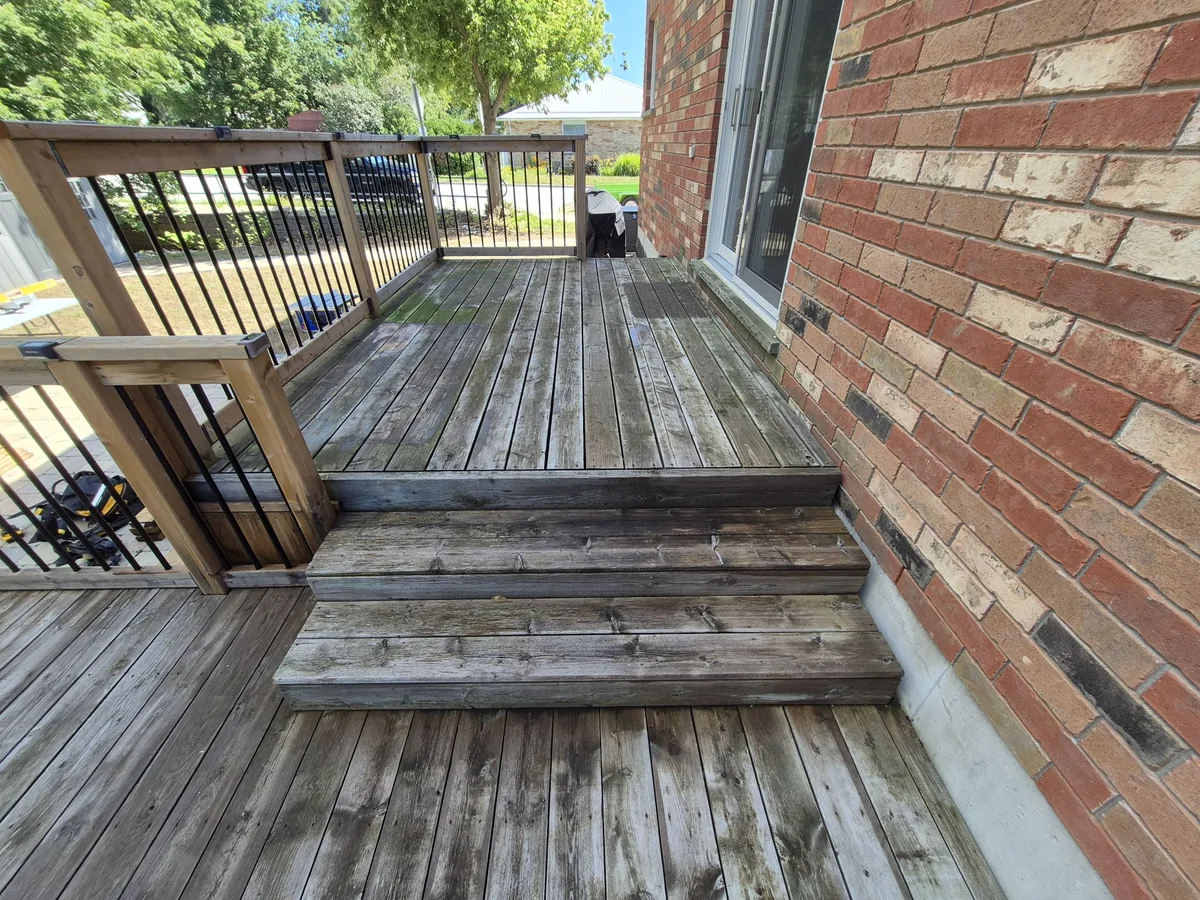
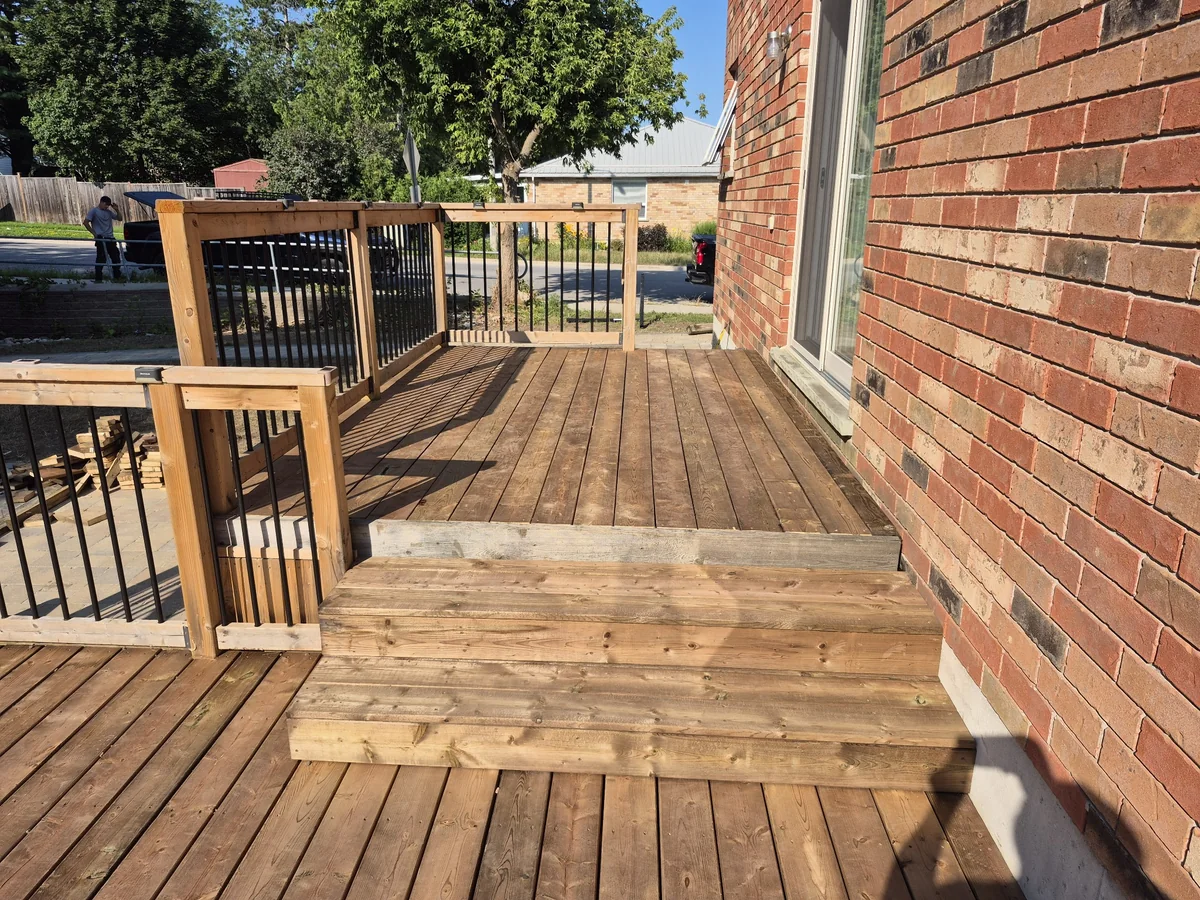
Why Barrie decks wear the way they do
Decks in the Lake Simcoe area take a lot of punishment. Snow sits on them for months, spring melt keeps wood wet, and repeated freeze-thaw cycles work on footings and fasteners every winter. Summer sun then dries the surface out. That cycle is why a deck can look fine from the patio door but have problems underneath that only show up when you get down and look.
You can't go by the age of the house or how the deck looks from the top. What matters is the shape the structure is in.
Signs a repair is probably enough
These problems are usually local. Fixing them doesn't mean rebuilding the deck.
- A few soft, cracked or splintered boards. If the damage is limited to some deck boards and the joists under them are solid, those boards can be swapped out.
- Loose railing sections. A railing that moves at one or two spots often needs re-fastening or a replacement section, not a new deck.
- Popped or rusted fasteners. Nails working up out of the boards are common and fixable.
- A worn or damaged stair. Treads and stringers can often be replaced on their own.
- Faded, grey or weathered surface. That's appearance, not structure. Cleaning and finishing may be all it needs.
The test is whether the damage stops at the surface. If the frame is firm, a repair is usually the sensible choice.
How Hunt handles it: If it's a few boards or one section, Rob fixes that and leaves the rest alone. You're not paying for work the deck doesn't need.
Signs your deck needs more than a fix
These signs point to the structure. They don't all mean a full rebuild, but they do mean the structure needs checking before anyone patches the surface.
Soft or rotted boards over a wide area
A few bad boards are a repair. Soft spots across much of the deck, especially near the house or where water collects, often point to rot that has spread into the joists. Replacing boards on top of rotted framing just hides the problem.
Wobbly posts
If the deck sways when you walk across it, or a post moves when you push on it, the posts or their connections may be failing. Rot at the base of a post, where it meets the ground or the footing, is a common cause.
Ledger board problems
The ledger is the board that attaches the deck to your house. It carries a large share of the load, so it matters more than any other single piece. Warning signs include a gap opening between the deck and the house, staining or rot along the ledger, or rust on the hardware holding it. Water getting in behind the ledger can also damage the house itself, which makes this one worth checking early.
Frost-heaved footings
Freeze-thaw cycles can push footings up or let them settle unevenly. You'll notice it as a deck that slopes where it used to be level, stairs that no longer line up, or a gap at the house. Correcting footings usually means working on the structure from the ground up.
Loose railings throughout
One loose railing section is a repair. Railings that are loose everywhere, or posts that have rotted at the connection, usually mean the railing system needs replacing. Railings are a safety item, especially with kids or older family members using the deck.
Several issues at once
One problem is usually a repair. Three or four of these together usually means the money is better spent on replacement.
How Hunt handles it: Rob looks at the framing, posts and ledger, not just the boards, and explains what he finds in plain terms.
A 10-minute check before you call
You can learn a lot from a quick walk around and under the deck:
- Probe the frame. Push a screwdriver into the joists, posts and ledger, especially near the house and at ground level. Firm wood is a good sign; soft wood is not.
- Check for movement. Push on posts and railings, and walk the deck to feel for sway.
- Look at the house connection. Note any gap, staining or rusty hardware along the ledger.
- Check level and stairs. A slope that wasn't there before, or stairs that no longer line up, points to footing movement.
- Take photos. Wide shots plus close-ups of trouble spots help Rob review it before a visit.
Not sure which side of the line your deck is on?
You don't have to diagnose it yourself. Send Rob those photos, or call him at 705-716-7069, and he'll tell you whether you're looking at a repair, a section replacement or a rebuild. Your written estimate is free and no obligation, Rob usually responds within about 24 hours, and booking early helps get your project on the schedule sooner.
Repair, partial replacement or full rebuild: three options
Repair or replace isn't always one or the other. Hunt does all three.
1. Repair. Replace damaged boards, re-secure or replace railing sections, fix stairs, deal with fasteners. Best when the frame is sound.
2. Replace worn sections. Keep the parts of the structure that are still good and rebuild what isn't, such as one area of decking and framing, a stair, or the whole railing system. This is often the middle ground for a deck that's mostly solid but has one problem area.
3. Full rebuild. Take the deck down and build new. This makes sense when the structure has multiple problems, when footings have moved, or when you want a different size, layout or material anyway. You can see some of Hunt's work on our projects page.
A rebuild is also the chance to change materials. If you're weighing that, our guide to pressure-treated, cedar or composite decking covers the trade-offs. Hunt builds in all three.
What does it cost to repair or replace a deck?
Repair costs depend entirely on what's wrong, so they're priced after Rob sees the deck. For replacement and rebuilds, material choice is one of the biggest drivers of deck cost, along with size and complexity. Size, material, height, stairs, railings and removal of the old deck all affect where yours lands. Your written estimate confirms the exact figure.
For more detail on what drives the price, see what a new deck costs in Barrie.
Payment is straightforward: a 50% deposit up front and the remainder on completion.
Timing and permits
Hunt's deck building season runs from April to mid-October. Smaller repairs depend on the job and the weather, so ask Rob what's possible when you call. If you're planning a rebuild, getting your estimate early helps you get on the schedule once the season opens.
Permits for decks are usually pulled by the homeowner. Whether you need one depends on the work, so check with the City of Barrie. Hunt can help you with the process.
How the process works
- Tell us about the deck. Call, email or use the estimate form. Photos help.
- Review or on-site visit. Rob reviews what you send and visits on site when needed, which is usually the case for structural concerns.
- Written estimate. Free, clear, no obligation.
- The work. Progress updates as it goes, and a final cleanup when it's done.
Why homeowners hire Hunt Contracting
- 10 years of industry experience, with general liability insurance and WSIB coverage.
- Repairs, section replacements and full rebuilds, in pressure-treated wood, cedar or composite, so the advice isn't tilted toward one answer.
As one fence and gate repair client put it in a Facebook recommendation: "Rob was prompt, professional and does excellent work." — Dave Forkutza
Learn more about our deck construction and repair services.
Get your deck checked before you spend on it
If your deck has soft spots, a wobble, a gap at the house or stairs that no longer line up, the sooner it's looked at, the more options you have. Call Rob at 705-716-7069, email quotes@huntcontracting.ca, or request your free written estimate. It's free, written and no obligation, Rob usually responds within about 24 hours, and you'll know whether you need a repair or a replacement before you commit to either.
Common questions
Frequently Asked Questions
How do I know if my deck needs to be repaired or replaced?
Look at the structure, not just the boards. A few soft boards, a loose railing section or a damaged stair are usually repairs. Widespread rot, wobbly posts, ledger problems or footings that have heaved usually point to replacing sections or rebuilding. Several issues at once generally mean replacement is the better investment.
Can you replace just part of a deck?
Yes. If most of the structure is sound, Hunt can replace the worn sections, such as an area of decking and framing, a stair or the railing system, and keep what's still good. Rob looks at the whole deck first so you know whether a partial replacement will actually last.
What is a deck ledger board and why does it matter?
The ledger is the board that attaches the deck to your house, and it carries a large share of the load. Signs of trouble include a gap between the deck and the house, rot or staining along the ledger, or rusted hardware. Because it's structural, ledger problems should be checked promptly.
How much does it cost to replace a deck in Barrie?
Material choice is one of the biggest drivers of deck cost, along with size and complexity. Repairs are priced after Rob sees the deck. Size, material, height, stairs and removal all affect the price, and your free written estimate confirms the exact figure.
Do I need a permit to rebuild my deck in Barrie?
It depends on the work, so check with the City of Barrie. For deck projects, the permit is usually pulled by the homeowner, and Hunt can help you with the process. Rob can talk through what your project involves when he gives you your free written estimate.
Planning a deck project?
Send Rob your address, a rough deck size, the material you're leaning toward and a few photos. Free written estimate.
Request a Deck Estimate