
If your fence posts are leaning after winter, frost heave is the most likely cause. Wet soil around the post freezes, expands and pushes the post up or sideways, and it rarely settles back to where it started. In most cases the fix is to pull the heaved post and set a new one in concrete, so the fence line stands straight again.
One crooked post wouldn't be a big deal on its own. The trouble is what it does to everything attached to it: panels pull out of line, rails crack at the fasteners, gates stop latching, and a lean that started small gets worse with every freeze-thaw cycle.
Already know which posts are moving? Send Rob a few photos of the leaning posts and their bases. You'll get a free written estimate with no obligation, usually within about 24 hours.
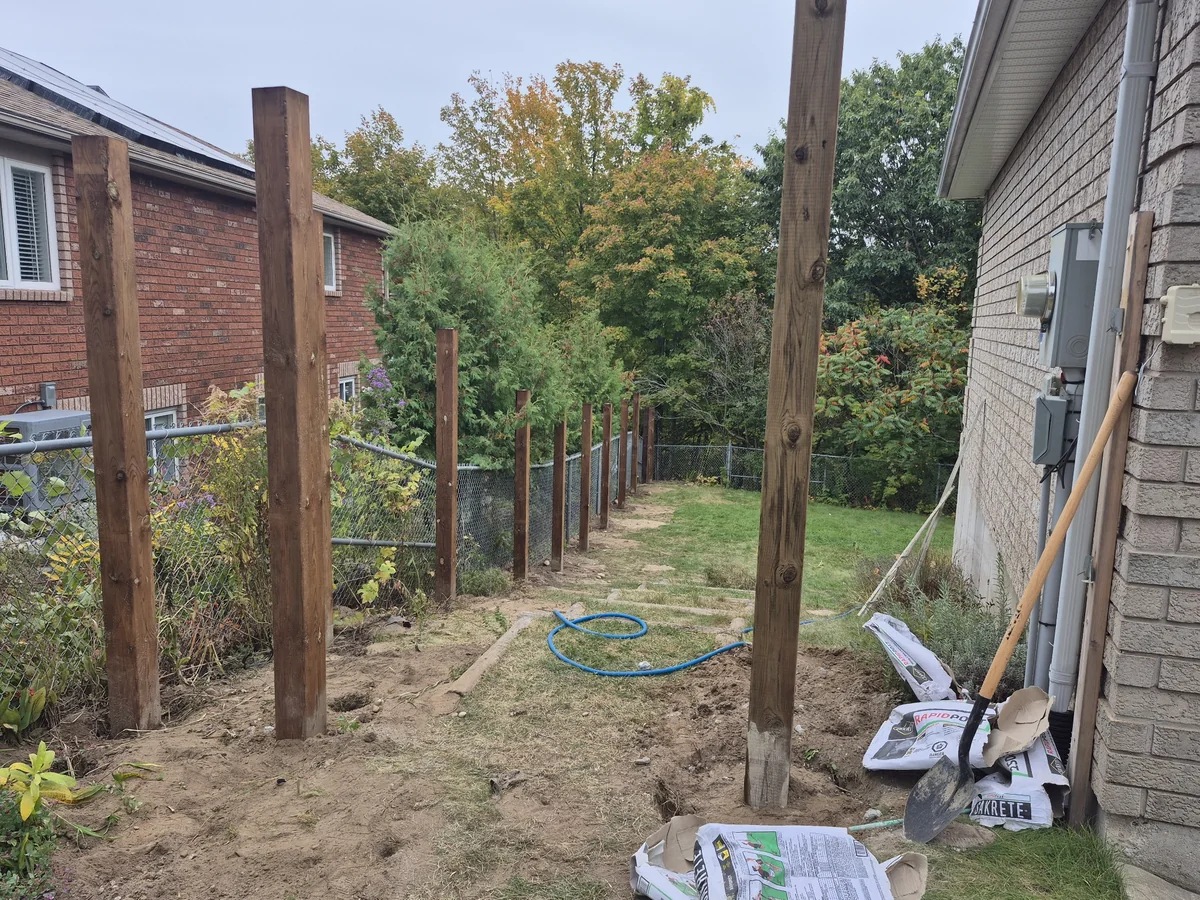
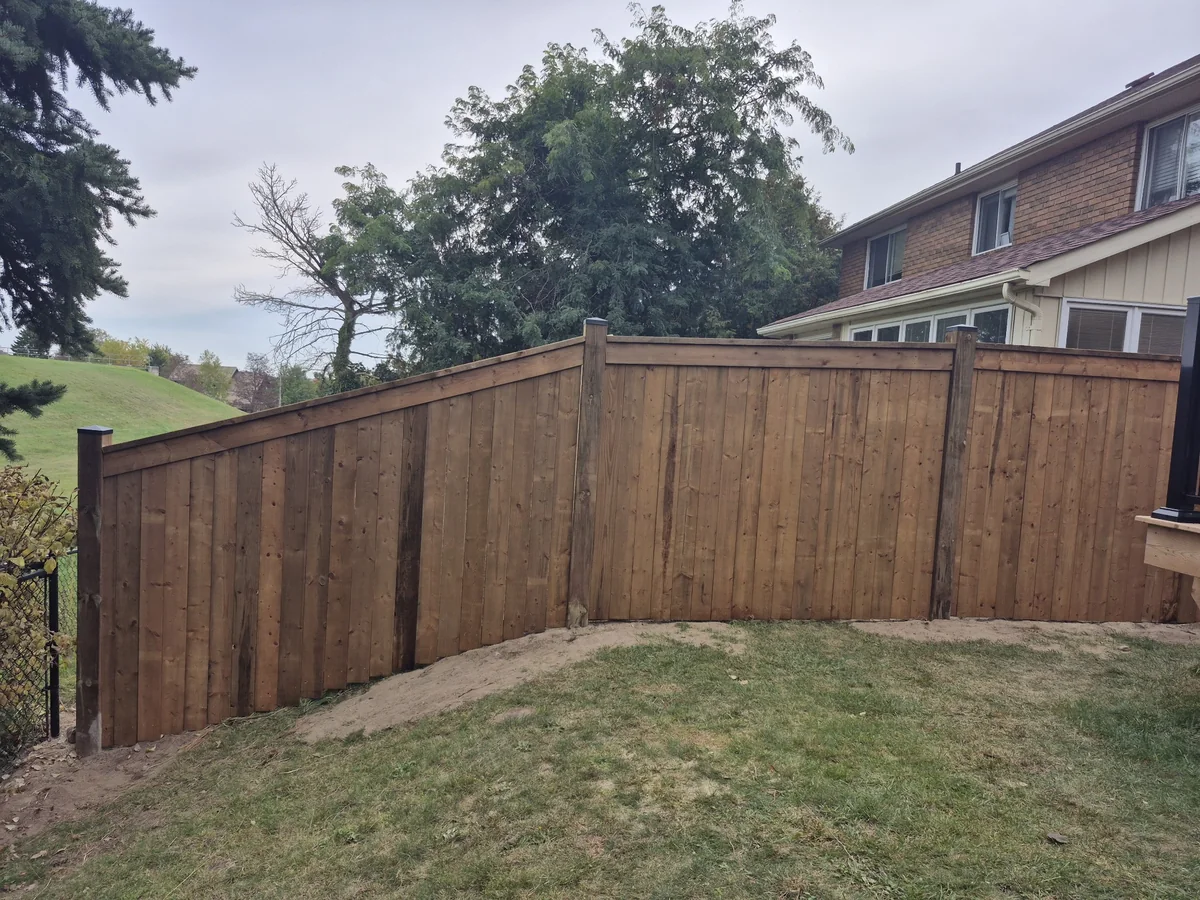
What frost heave actually does to a fence post
Frost heave happens when water in the soil freezes. Water expands as it turns to ice, and in fine, wet soils it can keep drawing in more moisture and forming layers of ice as the cold works its way down. That growing ice pushes against anything in the ground, including your fence posts.
Posts get moved in two main ways:
- Lifted from below or gripped along the sides. Frozen soil can grab the post or its footing and push it upward. When the ground thaws, soil and debris slump into the gap underneath, so the post never drops back fully. Repeat that over a few winters and the post sits noticeably higher than its neighbours.
- Pushed sideways. Soil rarely freezes evenly. One side of a post may be wetter, shaded or closer to a downspout, so it heaves harder on that side. The result is a lean.
Barrie's winters make this a familiar sight. Cold stretches, mid-winter thaws and spring freeze-thaw cycles mean the ground around a post can freeze and thaw many times in one season, and each cycle is another chance for the post to shift.
Why some posts heave and others don't
Two posts on the same fence can behave completely differently. The usual factors are:
- Wet soil. Frost heave needs water. Posts in low spots, near downspouts, along the bottom of a slope or in heavy, poorly draining soil are the most likely to move.
- Shallow posts. A post that isn't set deep enough sits in the zone that freezes and thaws every year, so it gets pushed around every year.
- Footing shape and condition. A footing that's wider at the top than the bottom, or concrete that has cracked, gives the frost more to grab onto.
- Water collecting at the base. If concrete is finished flush or dished at the top, water can sit against the post, soak in and freeze.
Depth requirements vary with soil, fence height and local conditions, so we won't quote a number here. Rob looks at your site and your existing posts and explains what the replacement post needs.
As general guidance, keeping water away from post bases helps any fence: point downspouts away from the fence line and don't let snow or garden soil pile up against the posts.
Heaved, rotted or just loose? How to tell
Before you can fix a leaning post, you need to know why it's leaning. A quick check from your side of the fence usually tells you a lot:
- The post sits higher than the others, or the bottom rail has lifted off its usual line. That points to heave.
- The concrete footing has lifted out of the ground or there's a visible gap or ring around the base. Also heave.
- The wood is soft, dark or crumbling at ground level and the post wobbles freely. That's rot, and the post has likely lost its strength where it meets the soil.
- The post is solid, but panels or rails are pulling away. Sometimes the post is fine and it's the hardware or rails that have failed.
Plenty of fences have more than one of these going on. That's one reason Rob prefers to see it, either through photos or an on-site visit when needed, before giving you a written estimate.
If several posts are failing, it's worth weighing whether a targeted repair still makes sense. Our guide on fence repair or full replacement walks through that decision.
How Hunt Contracting fixes a leaning fence post
For a post that has heaved or leaned, Hunt's usual fix is straightforward: pull the post and reset a new one in concrete.
Here's why that's the approach, rather than pushing the old post back:
- Shoving a heaved post back rarely holds. The soil around it has already been disturbed, and the same conditions that moved it will try to move it again.
- Old posts often have hidden damage. A post that's been sitting in wet ground long enough to heave may also be weakened at the base.
- A new post gives the fence a reliable anchor. Panels and rails go back on a post that is plumb, properly set and in line with its neighbours.
What the job involves depends on your fence. Whether your existing panels and rails can go back on comes down to their condition, and Rob tells you that up front in the written estimate, so you know what you're paying for before any work starts. Once the post is reset and the fence is back together, we clean up before we leave.
There's no flat price for a post reset, because the work changes from fence to fence: how many posts, how the old footing comes out, what's attached, and access to the fence line. Your written estimate spells it out.
Leaning posts and sagging gates
Gate posts take more load than any other post on the fence, and they're often the first to show frost damage. If the hinge post has heaved or leaned even slightly, the gate drops, drags or stops latching. Adjusting the hinges won't fix it if the post itself has moved.
Hunt handles gate repairs as part of fence work, priced on what the gate needs. If your gate is the main issue, see sagging or sticking gate? for what usually causes it and how it's sorted out.
"Rob was prompt, professional and does excellent work." — Dave Forkutza, Facebook recommendation (fence and gate repair)
Ready to get your fence standing straight? Call Rob at 705-716-7069 or request your free written estimate and tell him how many posts have moved and whether a gate is affected. The estimate is free, written and no obligation, you'll usually get a reply within about 24 hours, and booking early helps get your project on the schedule sooner.
Before any digging: utility locates
Resetting a post means digging, and digging means knowing what's underground. In Ontario, locates are requested through Ontario One Call. For fence work, the homeowner usually puts in the request, since it's simpler for the property owner to do it. Rob will let you know when it's needed so it doesn't hold up the job.
If you're also thinking about property lines or permits for a larger fence project, check with the City of Barrie. Our post on how to plan a new fence covers the planning side.
When should you fix a leaning post?
Sooner is better. A post that's leaning puts extra strain on the rails and panels on either side, and the next winter can push it further. What starts as one post can turn into a section.
Frozen ground is hard to dig, so post work is generally easier once the ground has thawed. That said, you don't need to wait to get the estimate. Sending photos now means you know the scope and cost, and you can get on the schedule.
Why homeowners hire Hunt Contracting
- 10 years of industry experience, with general liability insurance and WSIB coverage.
- Clear process: you tell us about the fence, Rob looks it over (and comes out to see it when needed), you get a written estimate, and you get progress updates while we work and a cleanup at the end.
- Simple payment: 50% deposit up front, the rest on completion.
Hunt also handles new fence installation, full fence replacement, gates and fence removal for homeowners, rental and property owners, and approved commercial clients around Barrie.
Get your leaning fence posts fixed
A leaning post won't straighten itself out, and each winter tends to make it worse. Send Rob a few photos of the posts that have moved, and he'll tell you whether it's heave, rot or failed hardware, and what it takes to fix it.
Call 705-716-7069, email quotes@huntcontracting.ca, or request your free written estimate. It's free, it's in writing, there's no obligation, and you'll usually hear back within about 24 hours.
Common questions
Frequently Asked Questions
What causes fence posts to lean after winter?
Frost heave is the usual cause. Water in the soil around a post freezes and expands, pushing the post up or sideways. When the ground thaws, soil settles into the gap underneath, so the post doesn't return to its original position. Wet soil, poor drainage and shallow posts make heaving more likely.
Can a leaning fence post be pushed back into place?
Pushing a heaved post back rarely lasts, because the soil around it is already disturbed and the same conditions can move it again. Hunt Contracting's usual fix is to pull the post and reset a new one in concrete, giving the fence a solid, plumb anchor. Rob confirms the approach in your written estimate.
How much does it cost to fix a leaning fence post in Barrie?
There's no flat price, because each job differs: the number of posts, how the old footing comes out, what's attached, and access to the fence line. Hunt Contracting provides a free written estimate, usually within about 24 hours, so you know the exact cost before any work begins.
Do I need utility locates to replace a fence post?
Yes, any digging should start with locates. In Ontario, locates are requested through Ontario One Call. For fence work, the homeowner usually submits the request because it's easier for the property owner to do. Rob will let you know when locates are needed so they don't delay your repair.
Should I repair my leaning posts or replace the whole fence?
If only a few posts have heaved and the panels and rails are in decent shape, resetting those posts is often enough. If many posts are failing or the wood is rotting throughout, replacement may make more sense. Rob looks at the whole fence and lays out your options in a written estimate.
Planning a fence project?
Send Rob your address, a rough fence length, any gates or repairs, and a few photos. Free written estimate.
Request a Fence Estimate