
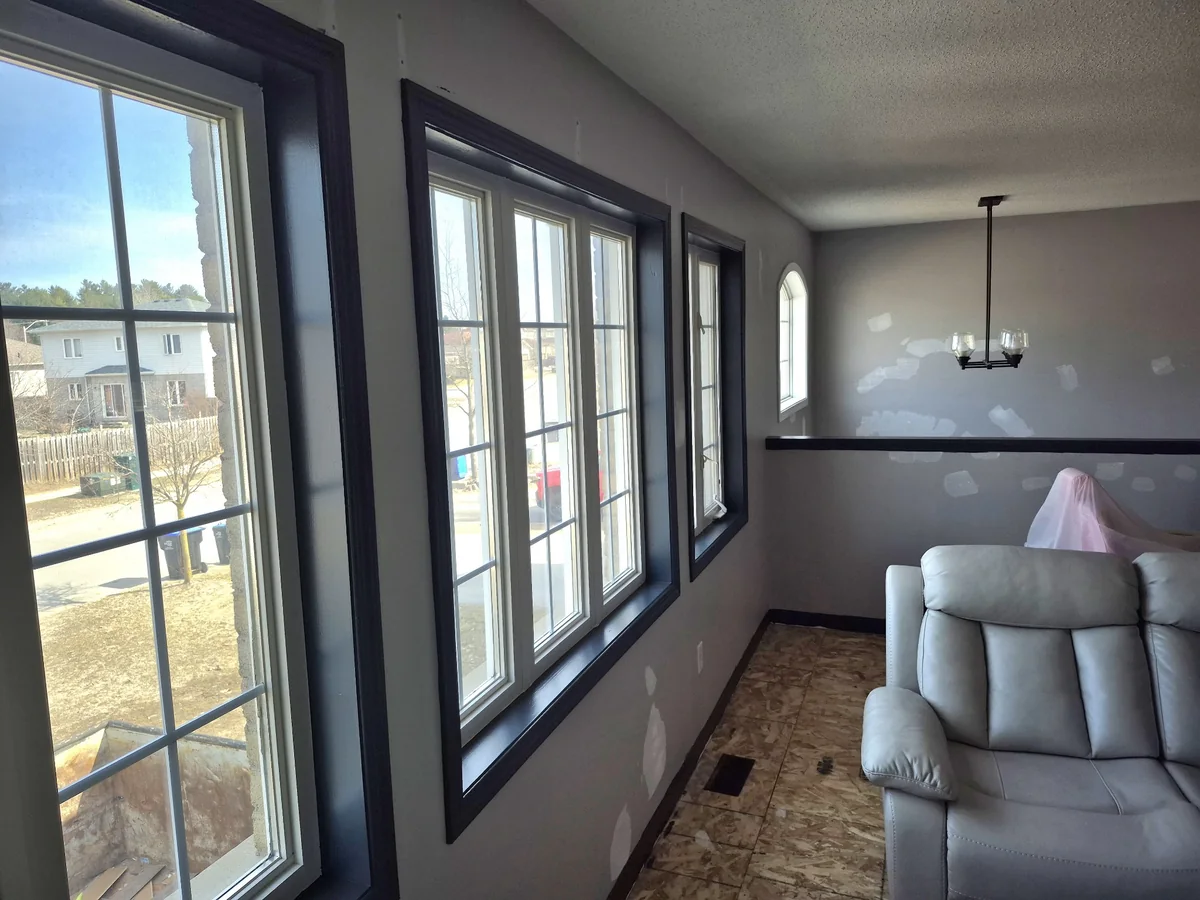
Most drywall damage can be patched. A doorknob hole, a dent from moving furniture or a gouge from a careless move-out is a quick repair, and once it's painted you won't know it was there. The decision changes when the damage goes deeper than the surface: drywall that got wet, shows mould, sags from the ceiling or is broken across a large area usually needs a section or full sheet replaced.
What you need to know is whether a patch will hold, and whether it would just hide a problem behind the wall. Here's how to tell, and how Rob at Hunt Contracting can help you sort it out. (For everything else Hunt does with drywall, see Hunt's drywall services.)
Not sure which side of the line your wall falls on? Tell Rob what you're seeing, whether it's a hole, a stain, a soft spot or a sag, through the free estimate form. The estimate is written and no obligation, and he typically replies within about 24 hours.
Patch vs replace at a glance
| Patch | Replace a section or sheet | |
|---|---|---|
| Typical damage | Small holes, dents, gouges, minor surface damage | Water-damaged, soft or crumbling board; mould; sagging; large or repeated damage |
| Board condition | Solid and dry around the damage | Soft, swollen, stained, delaminating or pulling away from framing |
| What happens | Damaged spot is filled or covered, then finished smooth | Damaged board is cut out back to sound material, new drywall is fastened, taped and finished |
| What it reveals | Only the surface | The cavity behind the wall: framing, insulation and the cause of the damage |
| Typical Barrie-area price | Small professional repairs can range roughly $75 to $250+, depending on size, location and finishing | Priced after Rob sees it |
| Best for | Everyday wear, accidents, move-out damage | Leaks, wet basements, ceiling damage, anything that keeps coming back |
Your free written estimate confirms the exact price.
When patching is the right call
A patch is the right fix when the damage is limited to the drywall face and the board around it is solid and dry. Common examples:
- Doorknob and furniture holes. Clean punctures with firm edges.
- Small dents and gouges. Damage from moving day, hockey sticks or a chair pushed into the wall.
- Holes left from removed fixtures. Old TV mounts, shelving anchors, towel bars.
- Tenant turnover damage. The usual scuffs and holes landlords find between tenants.
Small drywall repairs in the Barrie area can range from roughly $75 to $250+, depending on size, location and finishing required. Larger or water-damaged areas are priced after Rob sees them. (For a closer look at what moves the price on bigger jobs, see what affects drywall repair cost in Barrie.)
Typical fit: everyday wear and accidental damage on walls that are otherwise sound and dry.
When replacing a section or sheet makes more sense
Water damage
Drywall and water don't mix. Once the gypsum core gets wet, the board can soften, swell, stain or lose its grip on the fasteners. If the board is still firm and the stain is small, it may only need sealing and painting once it's dry. If it's soft to the touch, crumbling or bulging, it should come out.
Common culprits are plumbing leaks, bathrooms above finished rooms, roof leaks after hard winters and basement moisture. Replacing the damaged section also opens the wall so you can see how far the water travelled and confirm the cavity is dry.
The most important step comes first: fix the source of the water. New drywall over an active leak will just get wet again. If the cause is plumbing, Hunt can coordinate a licensed plumber so the leak is dealt with before the wall is closed up.
Replace when: the board has gone soft, swollen or crumbly, or you need to see what's behind the stain.
Signs of mould
Dark spotting, fuzzy growth, a musty smell or staining that bleeds back through paint all point to moisture sitting in or behind the drywall. Painting or patching over it doesn't solve anything, because the moisture is still there.
The right order is:
- Find and fix the moisture source (leak, condensation, poor drainage, humidity).
- Remove the affected drywall back to clean, dry material.
- Replace it with new board and finish it to match.
If growth covers a large area, it's worth having a mould specialist assess it before any drywall work starts. Either way, replacement rather than a patch is the usual answer once mould is visible on or through the board.
Watch for it in: basements, bathrooms and exterior walls where moisture has been a recurring issue, which is common in a climate with cold winters and freeze-thaw cycles.
Sagging ceilings
A ceiling that dips or bulges between joists is telling you something. Often it's water sitting on top of the board, fasteners that have let go, or drywall weakened over time. That isn't a patch job: the weakened section needs to come down and be replaced, and the cause dealt with at the same time.
Watch for it in: ceilings below bathrooms or under the attic.
Large or repeated holes
Once a hole gets well past dinner-plate size, or a wall has several patches clustered together, cutting out and replacing a clean section often gives a better result than stacking repairs. One new section finishes flatter than a cluster of patches, which shows once the wall is painted.
Replace when: the wall has big impact damage, multiple old repairs close together, or damage that crosses a corner or seam.
Get it looked at before it gets bigger
Water and mould damage rarely stay the same size. The sooner a stain, soft spot or sag is assessed, the more likely it stays a smaller job.
Have a ceiling stain or a soft spot you've been watching? Hunt Contracting offers free, written, no-obligation estimates. Tell Rob what you're seeing, send photos if you have them, and he typically replies within about 24 hours. When an on-site look is needed, he'll come by before giving you a written number. Booking early helps get your project on the schedule sooner. Request your free estimate or call 705-716-7069.
How Rob helps you choose
Some homeowners expect a patch and need a replacement. Others assume the whole wall has to go when a repair will do. Rob tells you which one you actually need:
- You describe the damage. That helps him judge whether it's likely a straightforward patch.
- He looks in person when needed. Water stains, mould signs and sagging ceilings usually need an on-site visit to check how soft the board is and how far the damage goes.
- You get a written estimate with the scope and price before any work starts.
- Rob does the work, keeps you posted along the way and cleans up at the end. If opening the wall turns up something that needs a licensed plumber or electrician, he'll bring one in.
Hunt Contracting works in Barrie and the surrounding communities. Rob has 10 years of industry experience, and Hunt carries general liability insurance and WSIB coverage.
Will the repair show once it's painted?
A patch or new section is only invisible once it's finished and painted properly. Repairs that aren't handled carefully can "flash," showing as a dull or shiny spot under the paint. Hunt handles interior painting too, so the repair can be painted without hiring a separate painter. If you're repainting the room, Hunt's check-out step helps: after the first coat, Rob walks the whole house and patches everything visible before the final coat, so patches don't flash through. One customer put it this way:
"Super friendly and easy to communicate with. Had Hunt contracting repaint my 2500 square-foot house, and do some patchwork. Will be using again." — Paul Bright, Facebook recommendation
If you're seeing hairline cracks or small round bumps along the screw lines rather than holes or water damage, that's usually a different issue. See drywall cracks and nail pops for what causes them.
Patch or Replace: The Short Version
- Patch when the damage is on the surface and the board around it is solid and dry.
- Replace a section or sheet when the drywall is soft, swollen, mouldy, sagging or broken across a large area.
- Fix the cause first whenever water or moisture is involved. Otherwise the new drywall will fail the same way.
If you can't tell whether that stain is surface-deep or soaked through, that's what the estimate is for. Reach Rob directly at 705-716-7069 or quotes@huntcontracting.ca. You can also request a free written estimate online. No obligation, and a reply within about 24 hours.
Common questions
Frequently Asked Questions
Can water-damaged drywall be patched?
Sometimes. If the board is still firm and dry and the stain is small, it may only need sealing and painting. If the drywall is soft, swollen, crumbling or bulging, the damaged section should be cut out and replaced. Either way, the source of the water needs to be fixed first, or the problem will return.
How do I know if drywall needs to be replaced instead of patched?
Press on the area around the damage. Soft, spongy or crumbling board, visible mould, a sagging ceiling, or damage much larger than a dinner plate usually means replacement. Solid, dry board with a contained hole or dent can usually be patched. Rob can confirm which one you need with a free estimate.
Can you just paint over mould on drywall?
No. Painting over mould hides it without fixing the moisture that caused it, and stains often come back through the paint. The moisture source should be found and fixed, then the affected drywall removed and replaced. If the growth covers a large area, have a mould specialist assess it before drywall work begins.
How much does Hunt Contracting charge to patch drywall?
Small drywall repairs in the Barrie area can range from roughly $75 to $250+, depending on size, location and finishing required. Anything larger, including section or sheet replacement, is priced after Rob sees the damage. You'll get a free written estimate before work starts. Rob typically responds within about 24 hours.
Is a sagging drywall ceiling a patch or a replacement?
A sagging ceiling almost always needs the weakened section replaced, not patched. Sagging is often caused by water sitting on the board, fasteners letting go or aging drywall. The cause needs to be addressed at the same time, which is why an on-site look is usually part of the estimate for ceiling damage.
Planning a drywall project?
Send Rob your address, what's damaged or unfinished, and a few photos. Free written estimate.
Request a Drywall Estimate