
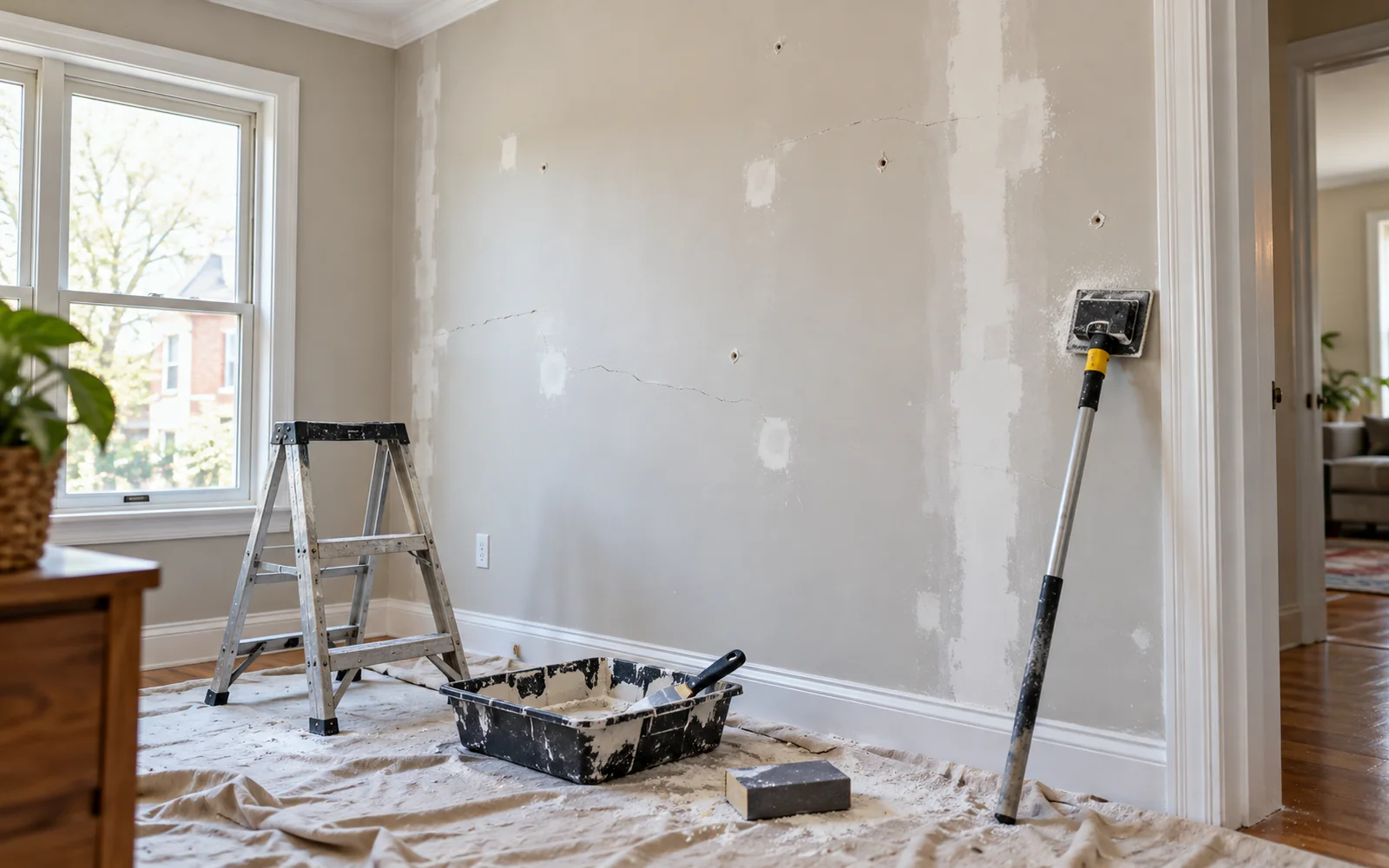
Most drywall cracks and nail pops are cosmetic. They come from normal movement in the house: framing lumber drying out, seasonal humidity swings and fasteners that weren't set quite right when the board went up. They are rarely a sign that something is seriously wrong, but they don't go away on their own, and a quick dab of filler usually brings them right back.
If you're looking at a row of little bumps along a ceiling, a hairline crack running off a door corner or a seam that opened up over the winter, you probably want to know if it's anything to worry about, and how to fix it so it stays fixed. Here's both.
Want Rob to take a look? Send a couple of photos of the pops or cracks through the estimate form. The estimate is free, written and no obligation, and he typically responds within about 24 hours.
What causes nail pops
A nail pop is the small round bump, or a crescent-shaped crack, that appears where a fastener holds the drywall to the framing. It happens when the fastener and the board separate, and it usually comes down to one of these:
- Wood shrinkage in newer homes. Framing lumber still holds moisture when a house is built. As it dries over the first year or two of heating seasons, the studs and joists shrink slightly. The fastener stays where it was, the wood pulls back, and the head pushes out against the paint and compound.
- Fasteners that weren't set properly. If a nail or screw was driven too shallow, missed the framing, or was driven so deep that it tore the paper face, the board isn't held tight. Over time it moves and the fastener shows.
- Seasonal movement. Barrie's cold winters and humid summers mean the wood inside your walls takes on and gives off moisture through the year. That small, repeated swelling and shrinking works fasteners loose.
- Settling and vibration. Normal settling, slamming doors and heavy foot traffic on the floor above can all loosen fasteners, especially in ceilings.
Nail pops are especially common in newer builds, but older homes get them too, particularly where drywall was hung over framing that has shifted over the decades.
What causes drywall cracks
Cracks show up in predictable places, and where they appear tells you a lot about why:
- Corners of doors and windows. These are stress points. Any movement in the framing concentrates at the corners, so diagonal hairline cracks running off a door or window frame are common.
- Taped seams. If a joint was under-filled or the tape wasn't bedded in enough compound, the seam can open or the tape can lift and bubble.
- Where walls meet ceilings. Seasonal movement in the roof or floor framing can open a crack along this joint, sometimes in winter and closing again in summer.
- Freeze-thaw and humidity swings. The same moisture changes that cause nail pops also stress seams, which is why many Barrie homeowners notice new cracks after the heating season.
Most of these are cosmetic. They're annoying, they catch the light, and they look worse once you notice them, but they don't mean the house is failing.
When a crack is worth a closer look
A few signs suggest something more than normal movement is going on. Consider having the structure looked at by a qualified professional if you see cracks along with:
- Doors or windows that have started sticking or won't latch when they used to
- A crack that keeps getting wider over weeks or months, rather than staying a hairline
- Floors that have developed a noticeable slope or sag
- Cracks that line up with matching cracks in the foundation
None of this means you should panic. It means the cause should be understood before the wall is patched, so you aren't covering up something that needs attention first.
How nail pops and cracks are fixed properly
The reason so many repairs fail is that they treat the symptom. Smearing compound over a popped nail hides it for a while, but the fastener is still loose and it pushes out again.
Hunt Contracting fixes nail pops at the source. Rob sets the fastener deeper so the board pulls tight to the framing again, or takes it out and fills the hole. Either way, the loose fastener isn't sitting there waiting to show through again.
Then he finishes the repair so it's ready for paint, which is where most DIY fixes fall short. A patch you can see under the new paint, or one that "flashes" with a different sheen, can look worse than the original crack.
For small damage, a range is more useful than a single advertised price. Small professional drywall repairs in the Barrie area can run roughly $75 to $250+, depending on size, location and finishing required. Anything larger is priced after Rob sees it. For a fuller breakdown of what drives the price, see what affects drywall repair cost in Barrie. If the damage is more than a crack or a few pops, patch or replace? walks through how that decision gets made.
Got a ceiling full of pops or a crack that keeps coming back? Call Rob at 705-716-7069 or request your free written estimate with a photo or two. It's free, written and no obligation, Rob typically replies within about 24 hours, and booking early helps get your project on the schedule sooner.
Why fixes flash through paint (and how Hunt avoids it)
If you've ever patched a wall, painted over it and still been able to see exactly where the patch was, you've seen flashing. Fresh compound absorbs paint differently from the painted wall around it, so the patch can show as a dull or shiny spot, especially in raking light from a window.
On interior painting jobs, Rob does what he calls the check-out. After the first coat, whether primer or paint, he walks the whole house and patches everything that's now visible before the final coat goes on. Fresh paint shows up nail pops and hairline cracks that were easy to miss on the old finish, so catching them then means the final coat covers the repairs and they don't flash through.
Minor patching and prep is included in interior painting. Barrie-area interior painting can range from about $2.50 to $7.00 per square foot, depending on prep and what surfaces are included. If you were already planning to repaint, it often makes sense to deal with cracks and nail pops as part of that job rather than separately.
One homeowner put it simply in a Facebook recommendation:
"Super friendly and easy to communicate with. Had Hunt contracting repaint my 2500 square-foot house, and do some patchwork. Will be using again." — Paul Bright
Do it now or wait?
In a newer home, it can make sense to wait until the framing has gone through a couple of heating seasons and most of the shrinkage has happened, then fix everything in one visit. In an older home, or if the cracks are bothering you now, there's no reason to wait.
A few practical points:
- Planning to sell? Cracks and nail pops are the kind of small flaw buyers notice in photos and showings, so it's worth fixing them before you list.
- Rental between tenants? Fixing them during turnover means you're not chasing them later. See repainting a rental between tenants if the walls need more than patching.
- Painting soon? Hold off on separate repairs and let them be handled in the check-out.
Rob can tell you which approach makes sense when he sees your walls.
Working with Hunt Contracting
- A clear process: tell us about the problem, Rob reviews it or visits when needed, you get a written estimate, then the work is done with progress updates and a final cleanup.
- Insured, with general liability insurance and WSIB coverage. Payment is a 50% deposit up front, the remainder on completion.
Hunt Contracting is based in Angus and serves Barrie and surrounding communities. See our drywall services, which cover everything from small patches to framing, insulating, vapour barrier and drywall for a whole basement.
Get your cracks and nail pops fixed properly
If your walls or ceilings are showing pops and cracks, a proper repair secures or removes the loose fastener instead of just covering the mark. Small professional repairs in the Barrie area can range from roughly $75 to $250+, depending on the repair. Call Rob at 705-716-7069, email quotes@huntcontracting.ca, or request your free written estimate. It's free, written and no obligation. Rob typically responds within about 24 hours, and booking early helps get your project on the schedule sooner.
Common questions
Frequently Asked Questions
Are nail pops a sign of a structural problem?
Usually not. Nail pops are most often caused by framing lumber shrinking as it dries, seasonal humidity swings or fasteners that weren't set properly. They're common in newer homes. If you also notice sticking doors, sloping floors or cracks that keep widening, it's worth having the structure looked at by a qualified professional.
Why do I keep getting nail pops after they've been fixed?
If a pop is simply covered with compound, the loose fastener is still there and pushes out again. A proper repair secures the fastener deeper so the board is held tight, or removes it and fills the hole. In newer homes, new pops can also appear while the framing finishes drying out.
How much does it cost to fix drywall cracks and nail pops in Barrie?
Small professional drywall repairs in the Barrie area can range from roughly $75 to $250+, depending on size, location and finishing required. Larger repairs are priced after Rob sees them. Your free written estimate confirms the exact figure. If you're repainting, minor patching and prep is included in interior painting.
Should I fix nail pops before painting?
They should be fixed before the final coat. On Hunt's interior painting jobs, Rob does a check-out after the first coat: he walks the whole house and patches everything visible before the final coat goes on. That way repairs are covered properly and don't flash through the finish.
When should I worry about a crack in my drywall?
Most hairline cracks at door and window corners or along seams are cosmetic. Pay closer attention if a crack keeps getting wider, or appears along with doors or windows that stick, floors that slope or matching cracks in the foundation. Those signs are worth having assessed before the wall is patched.
Planning a drywall project?
Send Rob your address, what's damaged or unfinished, and a few photos. Free written estimate.
Request a Drywall Estimate